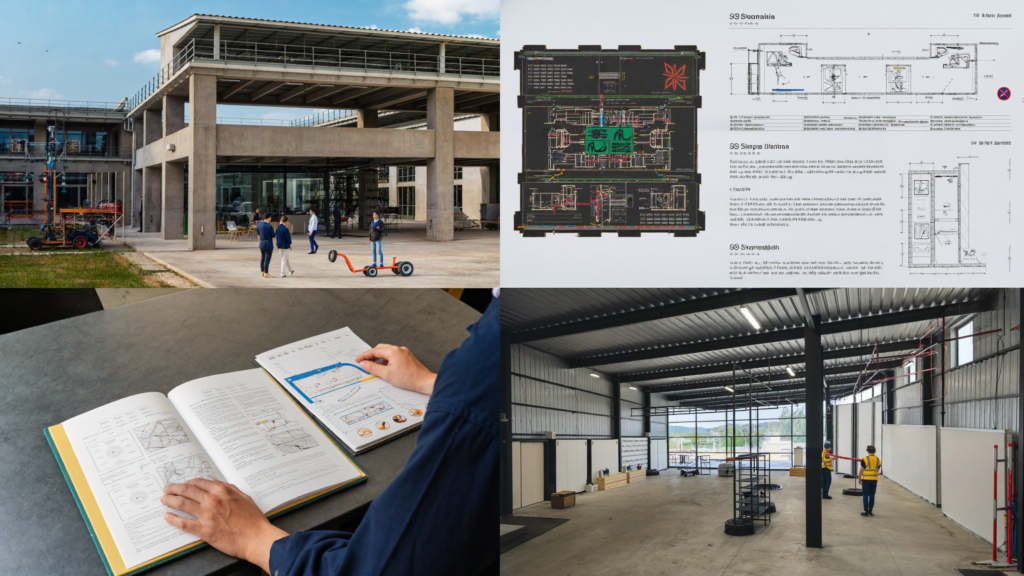
Selecting a manufacturing KBLI code in Indonesia is not a clerical exercise. The code describes what the factory actually makes and how it makes it, and it becomes a reference point for foreign-ownership screening, OSS risk-based licensing, industrial-sector standards, site planning, environmental review, product compliance and ongoing reporting. A code that is close in name but wrong in scope can send the project down an unsuitable licensing route or leave important activities outside the company’s registered business scope.
For foreign investors, the practical approach is to map products, raw materials, production steps, factory location and sales model before choosing a code. The result should then be checked against the current KBLI 2025 description, the OSS licensing profile and the investment rules that apply to the precise activity. This guide explains what to review and how to build a defensible manufacturing licensing plan.
Key Takeaways
- Manufacturing generally sits within Category C of KBLI 2025, but investors must select the detailed activity that matches the actual product and transformation process.
- A product name alone is rarely enough. Raw materials, production method, output, whether work is performed for the company or on contract, and supporting activities can change the classification analysis.
- The selected KBLI is used within OSS to determine the activity’s risk-based licensing route and applicable sector standards; an NIB alone should not be treated as universal permission to operate a factory.
- Foreign ownership must be screened at the activity level against the current investment business-fields framework and any sector-specific rules.
- Factory readiness also depends on land use, industrial location, environmental approval, building compliance, utilities, product rules, import arrangements and industrial reporting.
- Investors should document why each selected KBLI fits the planned activity and review the mapping whenever products, processes, capacity, site or business model change.
What Does a Manufacturing KBLI Code Do?
The Klasifikasi Baku Lapangan Usaha Indonesia, or KBLI, is Indonesia’s standard classification of economic activities. Statistics Indonesia, known as BPS, issued KBLI 2025 under BPS Regulation No. 7 of 2025. BPS describes the classification as a national standard for grouping economic activities by their characteristics. Investors can review the official KBLI 2025 publication and search the live OSS manufacturing category.
Manufacturing is broadly grouped under Category C. The category covers economic activities that transform materials, substances or components into new products through physical, chemical or biological processes. However, that broad definition is only the starting point. The detailed classification separates food, beverages, textiles, chemicals, pharmaceuticals, rubber and plastics, fabricated metal, electronics, electrical equipment, machinery, vehicles, furniture and other industrial activities. Each branch contains progressively more specific descriptions.
For licensing, the useful question is not simply, “Are we a manufacturer?” It is, “Which detailed activity best reflects the product, inputs and process at this facility?” IndoGateway’s guide to Indonesia’s business classification system explains the broader role of the KBLI in company and licensing decisions.
Start With the Product and Production Process
A reliable classification memo begins with operational facts. Marketing language can obscure the activity: a business may describe itself as a “mobility technology company,” while its Indonesian facility assembles electrical components, produces batteries, fabricates metal housings or only performs testing and packaging. Those are not automatically the same KBLI activity.
Prepare a product-and-process map that answers the following questions:
- What raw materials, components or semi-finished goods enter the facility?
- What physical, chemical or biological transformation occurs?
- What finished or semi-finished products leave the facility?
- Does the company own the inputs and output, or manufacture for another party under contract?
- Will the site also perform repair, installation, recycling, laboratory, warehousing, wholesale, retail or import activities?
- Which products are commercial outputs, and which are waste, by-products or internal inputs?
Compare those facts with the inclusion and exclusion language in the official KBLI description. Where several products use materially different processes, more than one KBLI may be appropriate. Conversely, registering a long list of speculative codes can create unnecessary licensing, investment and reporting obligations. The objective is complete but evidence-based coverage.

Do Not Use an Old Code Without Checking KBLI 2025
KBLI 2025 replaced KBLI 2020 as the updated classification standard. BPS later released an official KBLI 2020–2025 conversion table to help users trace how activities correspond between versions. That table is valuable for transition work, but it should be treated as a reference rather than a substitute for reviewing the current activity description.
A former code may map one-to-one, split into several activities, merge with another classification or require a closer review of the revised scope. Existing companies should compare their registered codes with their present products and processes. New investors should classify directly from the current operating model and use the conversion table only when legacy documents, group-company templates or older advice refer to KBLI 2020.
The practical file should preserve the current code description, the relevant inclusion and exclusion notes, the company’s process map and the reason for the selection. That record makes later discussions with advisers, industrial authorities, OSS administrators and counterparties much easier.
Check Foreign Ownership at the Exact Activity Level
A manufacturing label does not produce one universal foreign-ownership answer. Indonesia’s investment business-fields framework distinguishes activities that are open, prioritized, allocated or subject to partnership arrangements, subject to conditions, or reserved from private investment. The framework is set out in Presidential Regulation No. 10 of 2021, as amended by Presidential Regulation No. 49 of 2021, alongside sector-specific rules.
Screen each proposed KBLI separately. A group that plans to manufacture several product families should not assume that the ownership result for one code automatically covers the others. The review should also consider investor identity, business scale, location, product characteristics and whether the business model includes activities outside production, such as distribution or regulated services.
Complete this screening before finalizing the company’s purposes, capital plan, land commitment or equipment procurement. A later change in classification can affect the corporate scope and the approvals the project must obtain. For a connected view of the issue, see IndoGateway’s explanation of how KBLI, NIB and OSS fit together.
Understand How the KBLI Sets the OSS Licensing Route
Indonesia administers business licensing through the OSS risk-based system. Government Regulation No. 28 of 2025 is the current overarching regulation for risk-based business licensing, while Investment Ministry/BKPM Regulation No. 5 of 2025 provides OSS procedures. The selected activity, together with project data, is used to identify the risk profile and the licensing products that apply.
The route can involve an NIB alone for a low-risk activity, an NIB plus a Standard Certificate for a medium-risk activity, or an NIB plus a licence for a high-risk activity. Medium-risk activities are further differentiated in the OSS framework, and the legal effect of a Standard Certificate depends on the applicable route and verification status. Investors should rely on the live OSS profile for the precise manufacturing activity rather than assuming that every factory has the same risk tier.
The Ministry of Industry’s current sector standards are contained in Ministry of Industry Regulation No. 37 of 2025. The regulation addresses standards for industrial activities and products or services, licensing mechanisms, industrial-location matters, administrative sanctions and transitional provisions. The applicable standards still need to be matched to the selected activity and the project facts.
An NIB is therefore a foundational business identity and registration output, not a universal certificate that every production line is ready to operate. The company must satisfy the licensing products, verified standards and basic requirements shown for its activity. IndoGateway’s OSS RBA guide provides additional context on the risk-based structure.
Align the Code With the Site and Factory Configuration
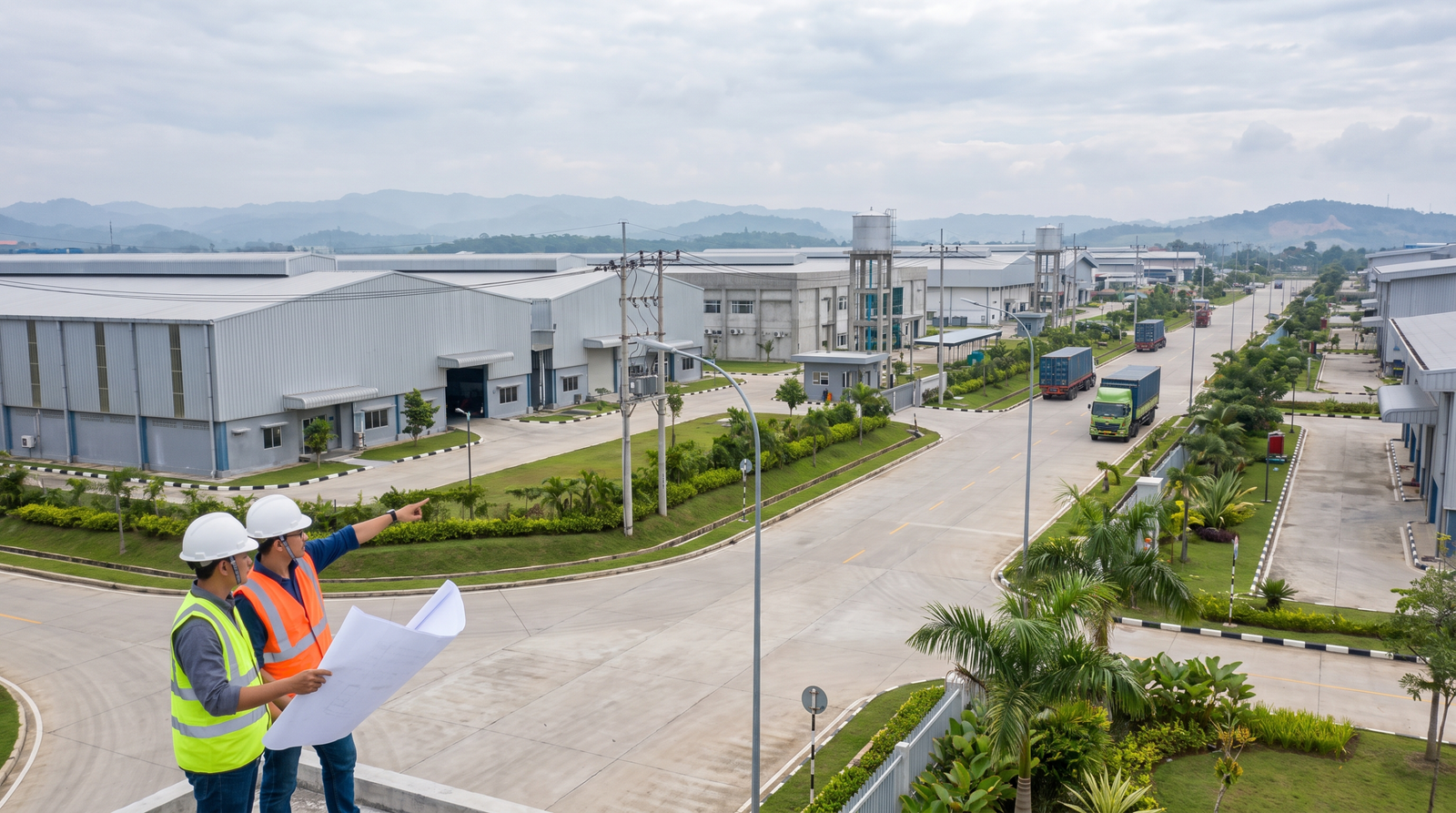
Manufacturing classification cannot be separated from site selection. Before signing a long lease or buying land, the project team should test whether the proposed industrial activity is compatible with spatial planning, industrial-location rules, estate rules, environmental constraints, utilities, logistics and the planned buildings. A site suitable for warehousing is not automatically suitable for chemical processing, food production or metal finishing.
The OSS system identifies basic requirements such as spatial-use conformity, environmental approval and building-related compliance. The exact route depends on the project, location, environmental impact and land or building status. Investors can review the current OSS basic-requirements portal, but a project-specific assessment is still necessary.
Site diligence should connect the KBLI mapping with:
- zoning and spatial-use compatibility;
- industrial-estate requirements and any available exception;
- environmental approval and waste, wastewater, emissions or hazardous-material controls;
- building approval and functional suitability;
- power, water, gas, drainage and telecommunications capacity;
- road access, ports, customs facilities and workforce availability; and
- room for future lines, warehouses and utility installations.
IndoGateway’s factory site selection support and factory construction and environmental services show how these workstreams can be assessed together.
Separate Factory Licensing From Product Market Access
A licence for the manufacturing activity does not automatically prove that every finished product may be sold in Indonesia. Depending on the product, separate registration, certification, labeling, testing, distribution or market-surveillance requirements may apply. Food, cosmetics, medicines, medical devices, electrical products, machinery and other regulated goods can involve different authorities and evidence.
This distinction matters during KBLI selection because the activity description should match what the factory makes, while the product-compliance plan should identify what must be approved, certified or registered before release. The teams should share a single product master list with specifications, intended use, claims, packaging, standards, production site and sales channel.
Import planning should also be integrated. Machinery, raw materials, components and finished goods may involve different importer roles and customs treatment. Do not assume that selecting a manufacturing KBLI automatically resolves every import entitlement. Review the planned flows with the company’s NIB, customs profile, sector requirements and product rules. IndoGateway’s product registration overview and Indonesia import licensing guide provide useful next-step context.
Plan for SIINas and Ongoing Industrial Compliance
Manufacturing compliance continues after OSS licensing. The Ministry of Industry operates the National Industrial Information System, known as SIINas. Ministry of Industry Regulation No. 13 of 2025 addresses the submission of industrial data, industrial-estate data and other information through SIINas. The regulation provides for reporting by industrial companies at relevant project stages and on a recurring basis.
The compliance calendar should be built from the requirements applicable to the company, not from a generic template. It may include industrial data, OSS updates, investment activity reporting, environmental monitoring, building and equipment obligations, workforce reporting, product registrations, standards, customs records and tax filings. Responsibilities should be assigned before production begins.
Keep the operational record aligned with the registered profile. If the factory adds a product line, changes a process, expands capacity, uses a new building, moves production or begins a distinct service, reassess the KBLI and related approvals before implementation. A corporate amendment without corresponding OSS, site or sector updates may leave the compliance picture incomplete.
A Practical Manufacturing KBLI Review Process
- Define the operating model. List products, inputs, processes, equipment, capacity, waste streams, contract-manufacturing arrangements and supporting activities.
- Search KBLI 2025. Review the official hierarchy, detailed descriptions, inclusions and exclusions; do not choose from the title alone.
- Map one or more defensible codes. Explain how each code connects to a real revenue-generating or necessary operating activity.
- Screen investment eligibility. Check foreign ownership and any scale, partnership or sector conditions for each activity.
- Check the live OSS profile. Confirm the risk tier, licensing products, sector standards and basic requirements generated for the project data.
- Validate the site. Align spatial, industrial-location, environmental, building, utility and estate requirements with the factory design.
- Build product and import workstreams. Identify approvals for finished goods, machinery, raw materials, labels, standards and distribution.
- Create an operating-readiness matrix. Assign every approval, dependency, owner, evidence item and renewal or reporting task.
This sequence should happen early enough to influence site, corporate and procurement decisions. IndoGateway’s factory setup service is designed to coordinate these connected workstreams for investors establishing industrial operations.
Common Mistakes Investors Should Avoid
| Mistake | Why it creates risk | Better approach |
|---|---|---|
| Choosing by product name only | The official scope may depend on inputs, process or exclusions. | Compare the full process map with the detailed KBLI description. |
| Copying a parent company’s old KBLI | KBLI 2025 may classify the activity differently from a legacy code. | Use the official conversion table, then validate against the current description. |
| Registering every possible code | Unused codes can introduce unnecessary licensing and reporting complexity. | Select documented activities supported by the business plan. |
| Treating the NIB as full factory approval | Activity licences, verified standards and basic requirements may remain outstanding. | Track every OSS and sector output through operational readiness. |
| Selecting land before licensing diligence | The process may be incompatible with zoning, estate or environmental conditions. | Run site and licensing diligence before an irreversible commitment. |
| Ignoring product compliance | A licensed factory may still be unable to release a regulated product. | Create a product-by-product market-access matrix. |
Questions to Resolve Before Committing Capital
- What exactly will be manufactured during the first phase and later expansion phases?
- Which production steps occur in Indonesia, and which remain outsourced?
- Does each planned activity fit the current KBLI 2025 description?
- Is foreign investment permitted on the intended terms for every selected activity?
- What does OSS show for the risk level, business licence and sector standards?
- Can the activity legally and technically operate at the proposed site?
- Which environmental, building, product, import and workforce approvals are project dependencies?
- What evidence is required before construction, commissioning, production and commercial sale?
- Who will own ongoing OSS, SIINas and other compliance reporting?

Frequently Asked Questions
1. Which KBLI category covers manufacturing in Indonesia?
Manufacturing is generally grouped in Category C of KBLI 2025, which covers the transformation of materials, substances or components into new products. Category C is divided into many industrial branches and detailed activities, so the category letter is not enough for company registration or licensing. Investors should identify the most specific code that matches the actual inputs, production process and outputs. They should also read exclusions, because repair, installation, waste processing, wholesale and other supporting functions may sit elsewhere. The live OSS directory and official BPS KBLI 2025 publication should be used for the current description.
2. Can one factory register more than one manufacturing KBLI code?
Yes, a company may register more than one activity when the factory genuinely conducts distinct manufacturing operations, but every selected code should be supported by the business plan and assessed separately. Different codes can produce different foreign-ownership, risk, sector-standard, location, environmental or product implications. The company should map each code to a product line, process, facility and revenue model, then confirm that the corporate purposes and OSS project data are aligned. Adding speculative codes without operational justification can complicate licensing and reporting. The appropriate combination depends on the facts of the planned facility.
3. Does a manufacturing NIB allow the factory to start production?
Not necessarily. The NIB is a foundational business identity and registration output in OSS, but operating readiness depends on the risk-based licensing route and the requirements applicable to the specific activity and project. A manufacturing activity may require a Standard Certificate or licence, sector-standard fulfillment, verification, spatial conformity, environmental approval, building compliance or other conditions before operational or commercial activity. Product approvals may also be needed before sale. Investors should review every OSS output and its status, not only whether an NIB has been issued, and should document the evidence required for commissioning and commercial production.
4. How does a KBLI code affect foreign ownership in manufacturing?
The KBLI identifies the economic activity that must be screened against Indonesia’s current investment business-fields framework and relevant sector rules. Many manufacturing activities may be open to foreign investment, but there is no safe universal conclusion for all products and processes. Conditions can differ by detailed activity, investor profile, business scale, location or other regulated characteristics. Each proposed code should therefore be checked separately before incorporation or expansion. The analysis should also cover non-manufacturing activities in the model, such as distribution or regulated services, because their ownership treatment may not automatically follow the factory’s manufacturing activity.
5. Should an existing manufacturer change from KBLI 2020 to KBLI 2025?
An existing manufacturer should review how its registered KBLI 2020 activities correspond to KBLI 2025 and follow the current official transition and system procedures applicable to its records. BPS has issued a 2020–2025 conversion table, but conversion is not always a substitute for substantive review. A code may have been split, merged or redefined, and the company’s operations may also have changed since registration. Compare the current product and process map with the new descriptions, then assess corporate, OSS, licensing, site and reporting consequences before making amendments. Project-specific implementation should be verified through current official guidance.
6. Must a manufacturing business operate in an industrial estate?
Industrial location is a material project question, but the answer should not be generalized without checking the current rules and the proposed activity, region and site. Ministry of Industry Regulation No. 37 of 2025 addresses industrial-sector standards and includes provisions concerning certain industries that may be excepted from industrial-estate location obligations. Whether an exception applies requires project-specific verification. Investors should assess spatial conformity, estate status, land rights, environmental impact, utilities, logistics and building requirements before committing to a site. A favorable commercial lease does not by itself establish regulatory suitability for the intended process.
7. Does the manufacturing KBLI also cover importing machinery and raw materials?
A manufacturing KBLI describes the industrial activity, but it should not be treated as an automatic answer to every import question. Import arrangements can depend on the company’s NIB and customs profile, the role in which goods are imported, the type and condition of machinery, the raw material or component, product restrictions, technical standards and sector rules. The import plan should distinguish capital equipment, production inputs, samples, spare parts and finished goods. It should then be tested against the company’s registered activities and current official requirements. Specialized review is particularly important for regulated products or used equipment.
8. When should a manufacturer review or amend its KBLI codes?
A manufacturer should review its classification before introducing a new product family, materially changing the production process, adding contract manufacturing, moving or expanding the factory, starting recycling or repair services, or adding distribution and import activities. Review is also sensible when the classification system or governing rules change. The purpose is to confirm that corporate purposes, OSS data, licences, site approvals, environmental documents, product registrations and ongoing reports still describe the real operation. Amendments should be planned as a coordinated compliance project rather than a standalone data change, because one activity change can affect several connected approvals.
Conclusion
The right manufacturing KBLI is the foundation for a coherent Indonesia factory licensing plan. It should reflect the actual product and transformation process, survive foreign-ownership screening, produce an understood OSS route and align with the proposed site, environmental pathway, buildings, products, imports and ongoing reporting. A defensible classification record is far more valuable than a code selected quickly from a title.
Regulatory note: Indonesian investment, licensing, tax, immigration, product, environmental and operating requirements may change and may depend on the business activity, ownership structure, location, products and project circumstances. This article provides general information and is not project-specific legal, tax or regulatory advice. Applicable requirements should be verified before implementation.
Plan Your Indonesia Manufacturing Setup With IndoGateway
IndoGateway helps foreign investors connect KBLI selection with company setup, OSS licensing, site diligence, factory approvals, product compliance, imports and operational readiness. A joined-up review can identify dependencies before they become expensive design, lease or procurement problems.
Contact IndoGateway to discuss your planned products, production process, ownership structure and Indonesia factory roadmap.