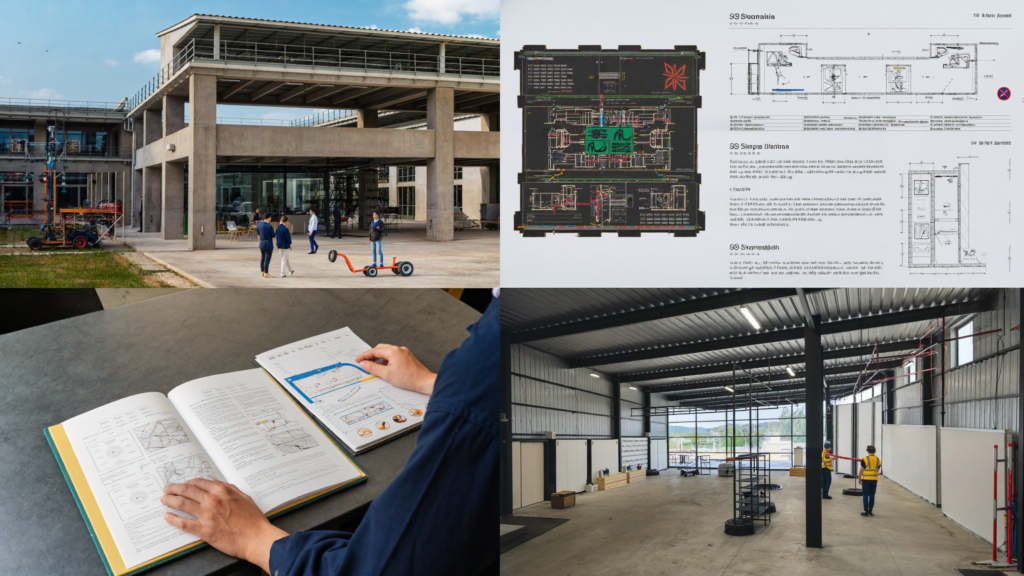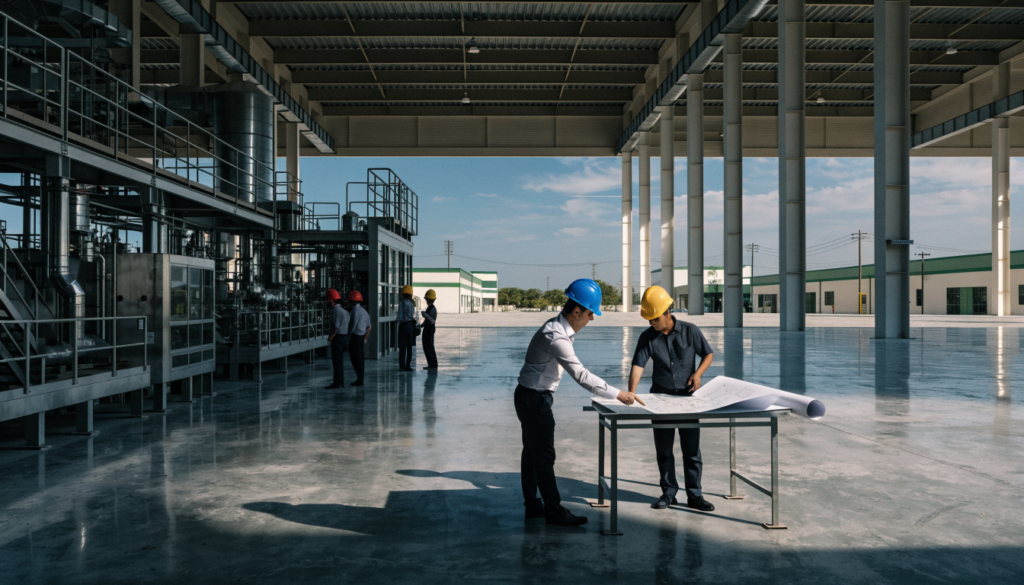
For an investor, the important AMDAL question is not simply whether the company operates in a “high-impact” industry. The real question is whether a specific planned business activity, at a specific scale and location, is classified as requiring an environmental impact assessment under Indonesia’s environmental approval framework.
That distinction matters. A warehouse, factory, energy project, estate development or infrastructure activity can follow a different environmental route depending on its capacity, footprint, technology, supporting facilities and surrounding environmental conditions. Screening the requirement too late can disrupt site selection, design, construction and the sequencing of business licensing.
Key Takeaways
- AMDAL is generally associated with planned businesses or activities that may create significant environmental impacts; lower-impact activities may follow UKL-UPL or SPPL routes.
- The answer depends on the activity description, KBLI, sector-specific thresholds, project scale, technology, location and cumulative scope, rather than the company name alone.
- Minister of Environment and Forestry Regulation No. 4/2021 contains the principal activity and scale lists used to distinguish AMDAL, UKL-UPL and SPPL, while Government Regulation No. 22/2021 governs the wider environmental protection and approval framework.
- A lease or land purchase should not be finalized on the assumption that an existing environmental document automatically covers a new tenant, expanded capacity or changed production process.
- Environmental screening should run alongside spatial, building, technical, utility and OSS licensing workstreams before irreversible project commitments are made.
What AMDAL Means in Indonesia
AMDAL is the Indonesian abbreviation for Analisis Mengenai Dampak Lingkungan Hidup, an environmental impact assessment for a planned business or activity that may have significant effects on the environment. It is not merely a consultant’s report kept in a project file. It forms part of the evidentiary basis for the relevant environmental approval and the commitments that the project must implement and monitor.
The national framework is set out in Government Regulation No. 22/2021 on Environmental Protection and Management. The regulation addresses environmental approvals as well as water, air, marine, hazardous-waste and non-hazardous-waste management, supervision and administrative sanctions. The activity lists and scale criteria are detailed in Minister of Environment and Forestry Regulation No. 4/2021.
Environmental approval should be treated as a core project workstream. Indonesia’s current risk-based business licensing architecture is governed at a high level by Government Regulation No. 28/2025, which replaced Government Regulation No. 5/2021. A project team should therefore verify how the environmental route connects with its current OSS application, NIB, risk classification and sector licence instead of relying on an older licensing flowchart.
AMDAL, UKL-UPL and SPPL: The Three Routes
Not every business needs AMDAL. Indonesia uses different environmental instruments according to the expected level and nature of impact:

| Instrument | General role | Practical investor question |
|---|---|---|
| AMDAL | Assessment for a planned business or activity that may create significant environmental impacts. | Does the activity meet a listed AMDAL threshold or trigger a location- or impact-based requirement? |
| UKL-UPL | Environmental management and monitoring instrument for activities that do not require AMDAL but still require structured controls. | Is the activity below the AMDAL scale but within the listed UKL-UPL range? |
| SPPL | Statement of commitment for activities assigned to the lower-impact route under the applicable criteria. | Is the activity eligible for SPPL after checking its actual scale, location and operating characteristics? |
The table is a conceptual guide, not a classification decision. The appropriate route must be screened against the current schedules and the project facts. IndoGateway’s comparison of AMDAL and UKL-UPL in Indonesia provides useful additional context, while the UKL-UPL and SPPL service overview explains the lower-impact pathways.
When a Business May Need AMDAL in Indonesia
A planned activity may require AMDAL when it falls within a listed type and reaches the relevant scale or capacity threshold. Regulation No. 4/2021 contains sector-by-sector schedules covering many forms of public works, industry, energy, transport, agriculture, waste management and other activities. Because the schedules are technical and often use different measures, a team should not reduce screening to land area alone.
1. The listed activity and scale point to AMDAL
The clearest case is when the planned activity appears in the regulation and its capacity, length, area, output, input or other measure reaches the AMDAL column. The relevant measure varies by activity. A factory may need to be assessed by production capacity and supporting processes, while infrastructure or development activities may use length, footprint, land acquisition or another sector-specific metric.
2. The location raises environmental sensitivity
Location can change the analysis. Proximity to protected or sensitive areas, water bodies, settlements, ecological features or other constrained land uses may require closer examination. Spatial conformity does not by itself prove that the environmental route is satisfied. The project team should map the legal site boundary, operational footprint, access, utilities, emissions, discharges and affected surroundings.
3. Several components form one integrated project
Investors sometimes screen a plant, warehouse, utility unit, wastewater facility and access works as separate items even though they function as one development. The competent authority may need to consider the combined project and its cumulative impacts. A reliable screening memo should therefore disclose all connected facilities, including those delivered by a landlord, affiliate, contractor or estate operator.
4. An existing operation will be expanded or changed
An existing environmental document is not an unlimited permission for future operations. Additional production lines, increased capacity, new raw materials, different fuels, revised wastewater characteristics, a larger footprint or a materially changed process may require an amendment, a new assessment or another approval action. The correct route depends on the approved baseline and the proposed change.
The Project Variables That Determine the Answer
A useful AMDAL screening exercise starts with an accurate project definition. At minimum, decision-makers should establish:
- the exact business activities and KBLI codes to be conducted at the site;
- the project’s development and operating phases;
- production capacity, raw materials, fuel, utilities and operating hours;
- total land area, building area and areas affected by ancillary works;
- air emissions, wastewater, noise, traffic, hazardous materials and waste streams;
- water and energy sources, discharge points and external utility connections;
- distance and relationship to settlements, waterways, protected areas and sensitive receptors;
- existing approvals held by the landowner, estate, seller or current operator; and
- planned expansions and the realistic full-build capacity, not only the first phase.
This data should be internally consistent. If the OSS project profile says one capacity, the building plans show another and the environmental submission assumes a smaller operation, the mismatch can create avoidable questions and rework. The practical objective is one controlled project baseline used across licensing, engineering and investment reporting.
How the AMDAL Process Generally Works
The precise procedure depends on the project and competent authority, but an AMDAL workstream commonly follows these stages:
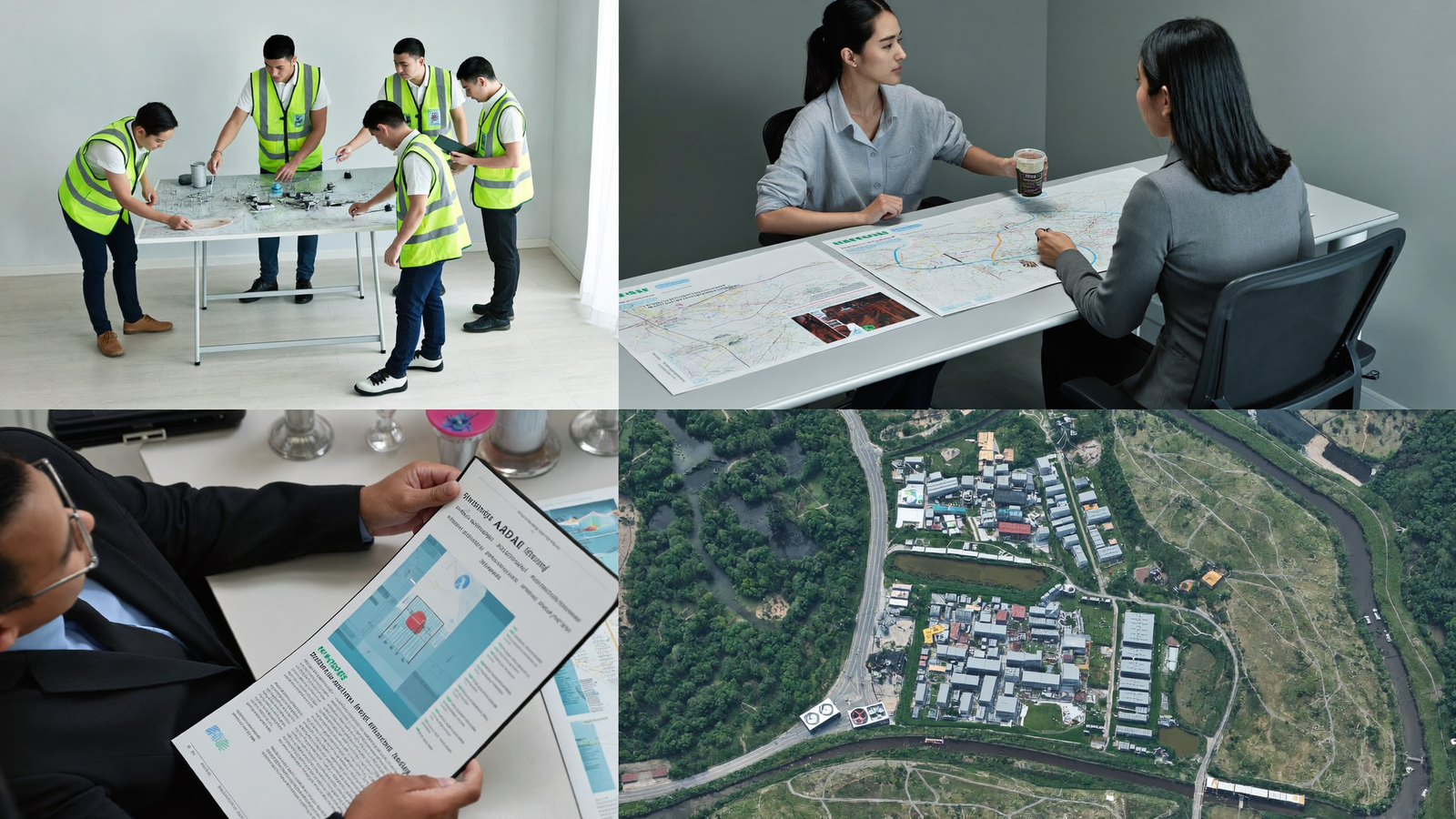
- Confirm the project scope. Freeze the activity description, site boundary, capacity, technology, utilities and supporting facilities sufficiently to support screening.
- Screen the environmental instrument. Compare the project against Regulation No. 4/2021, relevant sector rules and location constraints. Document the conclusion and assumptions.
- Identify the competent authority and submission route. Authority may depend on the project, location and licensing allocation under the current framework, including Minister of Environment/Environmental Control Agency Regulation No. 22/2025. Confirm the digital workflow, including the official AMDALNET platform where applicable.
- Prepare the AMDAL documents. The technical team develops the terms and scope of study, impact analysis, and environmental management and monitoring commitments using reliable baseline data and the final project design.
- Complete required review and participation steps. The process can involve technical evaluation and input from affected or interested parties in accordance with the applicable framework.
- Obtain and operationalize the environmental approval. Approval is the start of a compliance cycle. Commitments should be converted into owners, budgets, controls, monitoring schedules, records and management reporting.
Businesses that need coordinated support can review IndoGateway’s AMDAL and environmental approval service. For industrial developments, the wider factory, construction and environmental compliance workstream may be more appropriate than treating AMDAL as an isolated filing.
Why Site Selection and Leasing Decisions Come First
A well-priced site can become a poor investment if it cannot lawfully or practically support the proposed operation. Before executing a binding lease or acquisition, the investor should review zoning and spatial compatibility, land rights, access, utilities, building legality, environmental baseline conditions and the scope of existing approvals.
For leased premises, ask for the underlying environmental approval and all incorporated management and monitoring commitments, not only a certificate screenshot. Then compare the approved activity, tenant profile, capacity and site plan with the investor’s own operation. A landlord’s approval may cover common estate infrastructure while leaving tenant-specific production, emissions, wastewater or hazardous-waste obligations unresolved.
Transaction documents should allocate responsibility for historical contamination, shared treatment systems, monitoring data, authority access, corrective works and approval updates. Conditions precedent or termination rights may be appropriate where environmental or building compliance cannot be verified before signing. This is a legal and commercial structuring question that requires project-specific advice.
Common AMDAL Planning Mistakes
- Starting with the company’s KBLI only. KBLI is relevant, but the technical activity, scale, location and supporting facilities complete the screening picture.
- Using phase-one capacity to avoid a full-project review. An artificially narrow scope can create inconsistency when later phases are integral to the investment plan.
- Assuming an industrial estate resolves every environmental requirement. Estate infrastructure and approvals may help, but tenant-level obligations still require verification.
- Designing first and assessing later. AMDAL findings and approval conditions can affect layout, treatment technology, drainage, buffers, monitoring points and operating controls.
- Treating approval as completion. Environmental management, monitoring, reporting and records continue during construction and operation.
- Allowing inconsistent data across workstreams. Capacity, area, coordinates and process descriptions should match the OSS, environmental, building and sector submissions.
Practical Pre-Screening Checklist
Before commissioning a full environmental study, assemble a short decision file:
- Corporate documents, NIB information and proposed KBLI codes.
- Site coordinates, cadastral or lease plan, and total project footprint.
- Process flow, production capacity and expansion scenario.
- Raw-material, chemical, water, energy and fuel balance.
- Expected emissions, effluent, noise and waste inventory.
- Building, utility, access-road and supporting-facility scope.
- Existing landowner, estate or operator approvals and monitoring records.
- Map of nearby communities, water bodies and environmentally sensitive features.
Use the file to obtain a written screening position that cites the applicable schedule and records any assumptions requiring confirmation. If key engineering inputs are still provisional, label them as such and define the point at which the screening must be refreshed.
Frequently Asked Questions About AMDAL Indonesia
1. Does every foreign-owned company in Indonesia need AMDAL?
No. Foreign ownership is not, by itself, the test for AMDAL. The requirement generally depends on the planned business or activity, its technical scale or capacity, its location, likely impacts and the criteria in the applicable environmental rules. A foreign-owned consulting office and a foreign-owned industrial plant can therefore follow very different routes. The investor should screen each project location and activity against Regulation No. 4/2021 and current sector requirements. The result may be AMDAL, UKL-UPL, SPPL or another documented conclusion, depending on the verified facts.
2. Can a company rely on the landlord’s existing AMDAL?
Possibly in part, but never assume that the landlord’s document fully covers the tenant. Review the approved activity, site boundary, capacity, environmental impacts, management obligations and named responsible parties. An industrial estate may hold approvals for shared infrastructure, while the tenant remains responsible for its process, emissions, effluent, hazardous materials or operational changes. The lease should explain access to compliance records and allocation of duties. A project-specific review is essential where the tenant’s activity differs from the approved baseline or adds material capacity, equipment or waste streams.
3. What is the difference between AMDAL and an environmental approval?
AMDAL is the environmental impact assessment and its associated study documents for a planned activity with potentially significant impacts. Environmental approval is the government approval within the broader regulatory framework, supported by the applicable environmental instrument and commitments. In practical terms, a company should not treat the AMDAL report as a standalone commercial study. Its findings and management and monitoring commitments need to align with the approval, project design, construction controls and ongoing operations. Terminology and workflow should be confirmed under current rules for the relevant authority and OSS process.
4. Is land area the only threshold used to determine AMDAL?
No. Land area is one possible measure, but Regulation No. 4/2021 uses different criteria for different business and activity types. Capacity, production volume, infrastructure length, affected area, land acquisition and other technical measures may be relevant. Location and the nature of impacts can also change the assessment. Investors should prepare a complete technical description rather than asking a consultant to screen from a lease area alone. A small footprint with intensive processes may present different issues from a larger low-intensity development, so the applicable schedule must be read carefully.
5. Should AMDAL be completed before a company signs a lease?
Not necessarily completed, but environmental feasibility should be screened before the investor makes an unconditional site commitment. Early diligence should confirm whether the intended activity can be supported, what environmental instrument is likely, whether existing approvals are usable, and whether treatment capacity or design changes are required. Where the result remains uncertain, transaction documents can address conditions precedent, cooperation obligations, information access and exit rights. The correct legal structure depends on the deal. Signing first and investigating later can leave the company paying for a site it cannot use as planned.
6. How long does an AMDAL process take in Indonesia?
There is no responsible universal estimate without the project facts. Timing depends on document readiness, baseline data, project complexity, design stability, authority allocation, consultation and review requirements, and the quality of submissions and responses. Seasonal environmental surveys or changes to capacity and layout can also affect the programme. A planning schedule should separate time for project definition, fieldwork, document preparation, formal review, revisions and integration with other licences. Any quoted timeline should be checked against the current official procedure and the competent authority for the specific project.
7. What happens if a business expands after obtaining environmental approval?
The company should assess the proposed change before implementing it. Increased capacity, new production lines, different raw materials, altered wastewater or emissions, an expanded footprint or new supporting infrastructure may affect the approved environmental baseline. Depending on the nature and materiality of the change, an amendment, updated assessment or another approval action may be required. Management should compare the proposed project against the existing documents and commitments, then obtain specialist confirmation. It is risky to assume that an approval continues to cover every future configuration of the facility.
8. What information should a foreign investor give an AMDAL adviser?
Provide the proposed KBLI codes, site coordinates and plans, land and building status, production process, capacity by phase, machinery, raw materials, chemicals, water and energy use, emissions, effluent, waste, traffic and supporting facilities. Include realistic expansion plans and all existing approvals held by the seller, landlord or industrial estate. The adviser also needs information on nearby communities, waterways and sensitive areas. Complete inputs produce a more reliable screening and reduce contradictions with OSS, building and sector licensing documents. Uncertain data should be identified rather than presented as final.
Conclusion
A business needs AMDAL in Indonesia when its actual project characteristics place it in the significant-impact route under the applicable environmental framework. The decision is driven by the activity, scale, location, technology and integrated project scope. It should be made through documented screening, not by analogy with another company or by relying on a landlord’s certificate without reviewing its coverage.
The strongest approach is to connect environmental analysis with site diligence, engineering, spatial conformity, PBG and SLF, OSS licensing and operational compliance from the beginning. That gives management a realistic investment schedule and reduces the risk of redesign or licensing conflict after capital has been committed.
Plan Your Environmental Approval Route
IndoGateway can help connect project screening, environmental documentation, licensing and site-readiness workstreams for an Indonesia investment. Contact IndoGateway with your proposed activity, location, capacity and development plan to scope the next verification steps.