A lease can give a company possession of premises without proving that the building is approved, functionally fit or suitable for the tenant’s intended operation. For foreign investors in Indonesia, PBG and SLF due diligence is therefore a business-continuity issue, not a box to tick after the site has been selected.
The practical question is whether the available building documents cover the actual structure, approved function and proposed use. An office conversion, warehouse fit-out, factory line, restaurant kitchen or customer-facing venue can change the analysis. Investors should verify the documents, physical building and licensing data before a lease becomes unconditional.
Key Takeaways
- PBG approves building construction, alteration, expansion, reduction or maintenance against applicable technical standards; SLF confirms functional worthiness before a building is utilized under the applicable framework.
- A document bearing the correct address is not enough. Check the approved building function, drawings, area, number of floors, structural scope and SLF coverage against the premises offered.
- The landlord may be the document holder, but the tenant still needs contractual access to evidence and clear allocation of responsibilities for renewals, alterations and corrective work.
- Fit-out works or a change in use can create new PBG, SLF, technical or business-licensing questions even when the base building already has documents.
- Building checks should be coordinated with spatial conformity, environmental approval, fire and accessibility requirements, OSS licensing, utilities and sector-specific permits.
PBG and SLF Are Different Controls
Indonesia’s principal national building regulation is Government Regulation No. 16/2021, which implements the Building Law framework. It replaced the former IMB permit model with Persetujuan Bangunan Gedung, or PBG, and regulates Sertifikat Laik Fungsi, or SLF. The government’s Building Management Information System (SIMBG) supports PBG, SLF and related building services.
| Document | Core purpose | What a tenant should test |
|---|---|---|
| PBG | Approval for the building plan and relevant construction, alteration, expansion, reduction or maintenance in accordance with technical standards. | Does the approved design match the structure and the tenant’s planned function and fit-out? |
| SLF | Certification that the completed building is functionally fit for use based on the applicable administrative and technical assessment. | Is the SLF valid, does it cover the leased area and approved use, and are follow-up obligations controlled? |
PBG and SLF should not be treated as substitutes. One concerns approval of the building plan and works; the other concerns fitness for utilization after completion. IndoGateway’s guide to the difference between PBG and SLF provides additional background.
Why Foreign Investors Should Check Before Leasing
Building-document gaps can affect more than the property relationship. They may delay fit-out, sector licensing, insurance placement, employee occupation, equipment installation or commercial opening. They can also create uncertainty over who must prepare drawings, commission technical assessments, fund corrective works or communicate with local authorities.
The risk is particularly acute when the entity team and property team work separately. A PT PMA may register KBLI activities and a project address in OSS while the selected building is approved for a different function. The company can then hold corporate and business-identification documents yet still lack a reliable site-readiness route.
Government Regulation No. 28/2025 now governs Indonesia’s wider risk-based business licensing system, replacing Government Regulation No. 5/2021. Its interaction with building and other basic requirements means investors should use a current integrated licensing map, not an older checklist that treats OSS, PBG and SLF as disconnected applications.
The Essential PBG and SLF Due-Diligence Questions
1. Are the documents authentic and complete?
Request full copies and supporting schedules, drawings, QR codes or system records where applicable. Confirm the issuing authority, document number, building owner, location, approved function, classification, area and validity. A cropped certificate image does not show whether attachments exclude part of the premises or impose conditions.
2. Do the documents match the physical building?
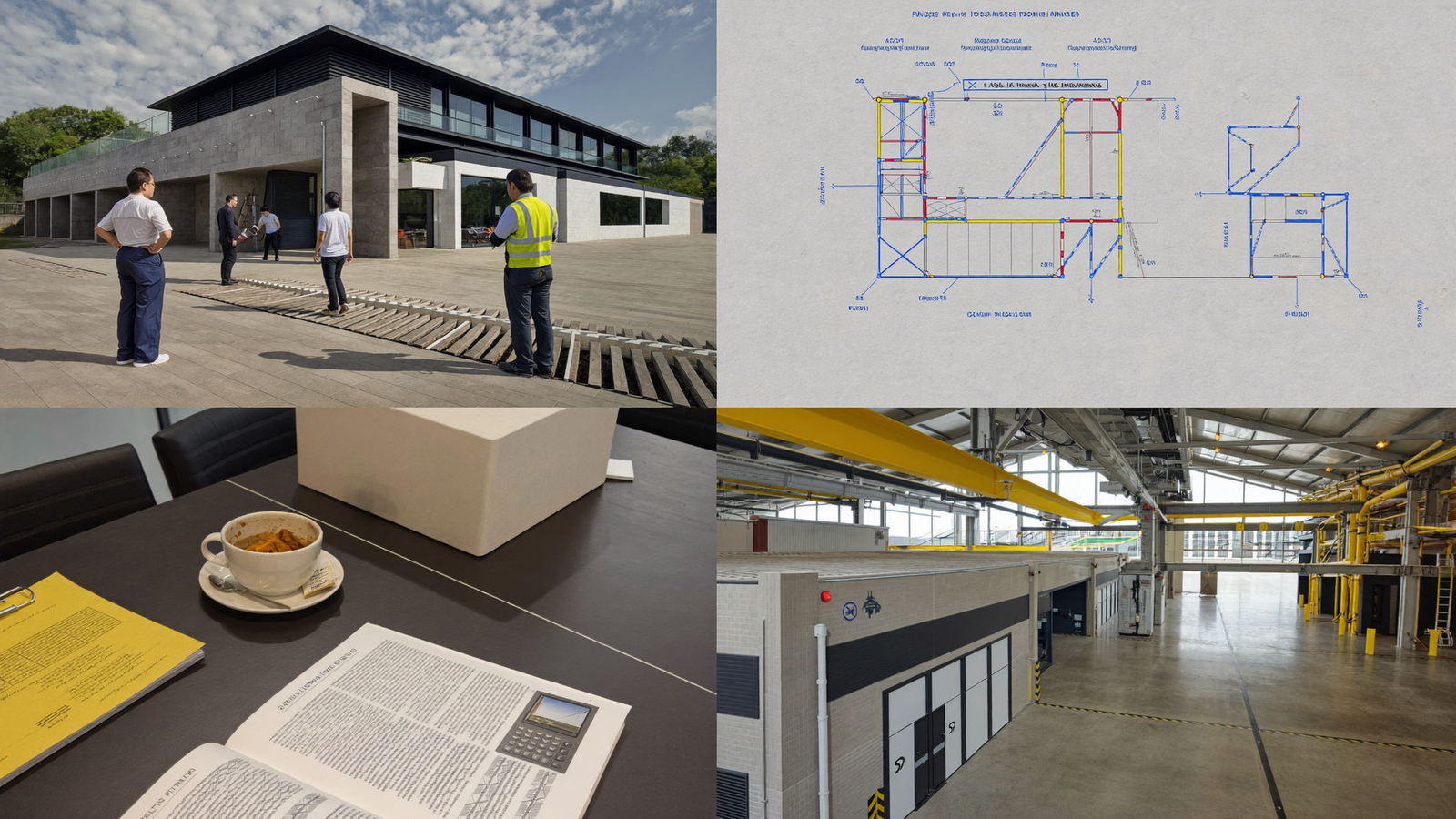
Compare approved drawings and stated specifications with an on-site technical inspection. Check floor area, number of levels, mezzanines, extensions, loading structures, canopies, mechanical spaces and material changes. Unrecorded additions may not be covered merely because they sit within the same land parcel.
3. Does the approved function match the proposed use?
A building’s approved function and classification matter. The tenant should explain the exact proposed operation, occupancy, public access, process, storage, equipment and hazardous materials to the property and technical teams. “Commercial use” or “warehouse” is too vague when the intended activity includes manufacturing, food handling, a clinic, accommodation or high-density assembly.
4. Does the SLF cover the entire leased area?
In a multi-unit building or industrial complex, determine whether the SLF covers the base building, a specific tower, common facilities, all extensions and the unit being leased. Confirm whether later alterations have been assessed. The tenant also needs clarity on common systems such as emergency access, lifts, fire protection, electricity, drainage and wastewater treatment.
5. Will the fit-out change the compliance position?
Partitions, floor loading, façade changes, new kitchens, ventilation, production machinery, chemical storage, fire compartments and utility upgrades can affect technical compliance. Agree who will screen the fit-out, prepare drawings, obtain approvals and update the relevant building records. The lease’s generic “tenant obtains permits” clause may be insufficient where applications require the owner’s cooperation or base-building data.
Document Request List for the Landlord
A proportionate request list should include:
- the current PBG, legacy IMB if relevant, SLF and all schedules or attachments;
- approved architectural, structural and building-services drawings;
- records of later renovations, additions and changes of function;
- land title or control documents and evidence connecting the landlord to the property;
- building-tax and address records used to reconcile the site identity;
- inspection, maintenance and test records for critical building systems;
- fire-safety, accessibility, lift, electrical or other technical records applicable to the building;
- environmental approvals and utility-discharge arrangements relevant to occupation;
- notices, sanctions, disputes or pending corrective actions involving the building; and
- evidence of applications or renewals that the landlord says are in progress.
The scope should be tailored to the property. A small fitted office, a shopping-centre unit and a standalone manufacturing site do not present the same technical or regulatory risks.
How to Test the Documents Against the Proposed Operation
- Create a use statement. Describe headcount, operating hours, visitors, loading, equipment, materials, utilities, waste and safety characteristics.
- Map the occupied area. Mark exclusive space, common areas, access, parking, loading, storage and external plant on the landlord’s approved drawings.
- Commission technical review. Have qualified specialists compare the physical building and proposed fit-out with the PBG, SLF and relevant standards.
- Reconcile licensing data. Align address, KBLI, project scope and operating risk with the current OSS record and sector requirements.
- Identify gaps and owners. Separate landlord base-building actions, tenant fit-out actions and joint submissions.
- Convert gaps into lease protections. Use conditions, long-stop dates, access rights, cooperation duties and cost allocation appropriate to the transaction.
For sites with material uncertainty, IndoGateway’s legal due diligence support can be coordinated with a technical review. Industrial investors may also need a broader factory site selection assessment.
Factory and Warehouse Sites Need Deeper Review
Industrial and logistics premises frequently contain operational features that are not obvious from a headline PBG or SLF record. Floor-loading limits, racking, dock structures, cranes, boilers, pressure systems, process ventilation, electrical demand, hazardous materials, wastewater and fire water can alter both technical feasibility and the regulatory path.
An industrial estate’s approvals and common infrastructure can be valuable, but they do not automatically establish that every tenant activity is permitted. Review the estate regulations, utility capacities, wastewater acceptance criteria, emergency arrangements and the division of environmental duties. Connect those findings with the tenant’s NIB and OSS business licensing, environmental route and sector licences.
Future expansion also matters. If the initial lease area is suitable but the expansion unit lacks matching documentation or utility capacity, the growth plan may fail. Due diligence should test the realistic operating case, not only the minimum layout used on opening day.
Lease Clauses That Deserve Careful Attention
Property counsel should tailor the lease, but the commercial team should make sure the document addresses the practical risk allocation:
- landlord representations about building documents and approved use;
- delivery of complete copies and continuing access to records;
- conditions precedent for missing approvals or corrective works;
- owner cooperation with tenant submissions and fit-out approvals;
- responsibility for base-building versus tenant-specific compliance;
- cost and timing consequences if the building fails an inspection;
- maintenance, testing, renewal and notification obligations;
- rights to suspend fit-out, delay commencement or terminate if critical conditions fail; and
- restoration duties at the end of the lease.
A clause stating that the tenant accepts the property “as is” can shift substantial risk. The legal effect depends on the agreement and Indonesian law, so it should be reviewed by qualified counsel rather than treated as routine boilerplate.
Common Mistakes to Avoid
- Checking only the address and ignoring the approved function and drawings.
- Assuming a legacy IMB resolves all current utilization and alteration questions.
- Taking possession before documenting responsibility for open corrective work.
- Submitting an OSS project address before confirming that the building supports the registered activity.
- Allowing contractors to start material fit-out work without a compliance screen.
- Relying on the landlord’s statement that “all permits are complete” without reviewing evidence.
- Ignoring common-area systems that determine whether the tenant can safely operate.
- Failing to preserve technical records needed for future SLF or building actions.
Frequently Asked Questions About PBG and SLF in Indonesia
1. What is the practical difference between PBG and SLF?
PBG concerns approval of the building plan and relevant construction, alteration, expansion, reduction or maintenance against applicable technical standards. SLF concerns whether the completed building is functionally fit to be utilized. A tenant should normally examine both because an approved design does not by itself prove that the finished building is fit for use, while an SLF should be read with the approved function and building scope. The exact requirements and applicant route depend on the building, works, local administration and current national framework.
2. Does the tenant or landlord obtain PBG and SLF?
The building owner commonly controls base-building records and applications, but responsibility cannot be determined from the words “landlord” and “tenant” alone. Ownership, the nature of the proposed works, the application requirements and the lease allocation all matter. Tenant fit-out or a changed use may require owner cooperation, technical documents or a new regulatory step. The investor should identify each action, the eligible applicant, required signatures, costs and timing before signing. The lease should then allocate duties consistently with what the authority and systems actually require.
3. Can a foreign company lease a building that still has an IMB?
A legacy IMB should be reviewed under the transitional provisions and the building’s present facts; it should not be rejected or accepted automatically. Government Regulation No. 16/2021 contains transition rules for prior building permissions and for existing buildings. The tenant should verify the document, approved use, physical conformity, later alterations and SLF status. Where the building or intended use has changed, further action may be needed. A current legal and technical review is the safest way to determine whether the existing record supports the proposed occupation.
4. Is an SLF required before a building is occupied?
The SLF is the instrument used to establish that a completed building is functionally fit before utilization under the national building framework. For a lease transaction, the practical task is to confirm that a valid SLF applies to the actual premises and function, including relevant additions and common systems. Do not rely only on the landlord’s assurance that the building has been used for years. Existing occupation does not prove documentary or technical compliance. Any exceptions, transition treatment or renewal position should be checked for the specific building and jurisdiction.
5. What if the SLF covers the building but not the tenant’s fit-out?
The tenant should have the proposed fit-out screened before construction. New partitions, structural loading, ventilation, kitchens, production equipment, fire systems, utilities or changes in occupancy can affect technical compliance and may require building-document action. Determine what the existing SLF assessed, whether the fit-out changes the approved function or performance, and who must submit updated documents. The lease and fit-out agreement should require landlord cooperation and define responsibility for design, review, inspections and costs. Operation should not begin on the assumption that base-building coverage extends automatically.
6. How can an investor verify a PBG or SLF?
Obtain the complete document and attachments, then reconcile its number, issuer, owner, address, building function, classification, area and drawings with the physical property. Review available system evidence through SIMBG or the relevant authority process and ask the landlord to authorize clarification where necessary. A technical inspection should identify unrecorded additions or material differences. Verification is stronger when legal, documentary and engineering findings are combined. A screenshot, QR code or broker’s summary should be treated as a starting point, not conclusive evidence of full coverage.
7. Can missing PBG or SLF documents delay OSS licensing?
They can affect the wider readiness and licensing path, particularly where building requirements connect with basic requirements or sector verification. The impact depends on the KBLI, risk level, business licence, premises and current OSS workflow. Even where an OSS step is technically available, the company should not conclude that the site is lawful or operationally ready without resolving building issues. Map the sequence across spatial, environmental, building and business licensing. This avoids a situation in which the entity holds an NIB but cannot safely or compliantly open the location.
8. What should be a condition precedent in the lease?
Conditions should reflect the material unresolved risks. Examples may include delivery and verification of the PBG and SLF, confirmation that the approved function supports the intended use, completion of specified corrective works, owner consent and cooperation for fit-out filings, and evidence of utility or environmental capacity. The condition needs an objective test, responsible party, deadline and consequence if it fails. The appropriate drafting depends on the transaction and should be prepared by qualified counsel. A vague promise to “complete permits later” rarely gives the tenant enough operational certainty.
Conclusion
PBG and SLF due diligence should answer a concrete question: can this particular building, in its actual condition, support the investor’s intended activity and fit-out? That requires more than collecting two certificate names. The approved function, drawings, physical structure, utilization status and business-licensing data must tell the same story.
Resolve material gaps before the lease becomes unconditional, and allocate remaining actions to the party that can legally and practically complete them. For industrial or regulated activities, integrate the property review with environmental, OSS and sector approvals so the site decision supports the whole operating model.
Check the Site Before You Commit
IndoGateway can coordinate document review, site-readiness analysis and the related PBG, SLF and licensing workstreams. Contact IndoGateway with the property documents and a clear description of your intended use before finalizing the lease.