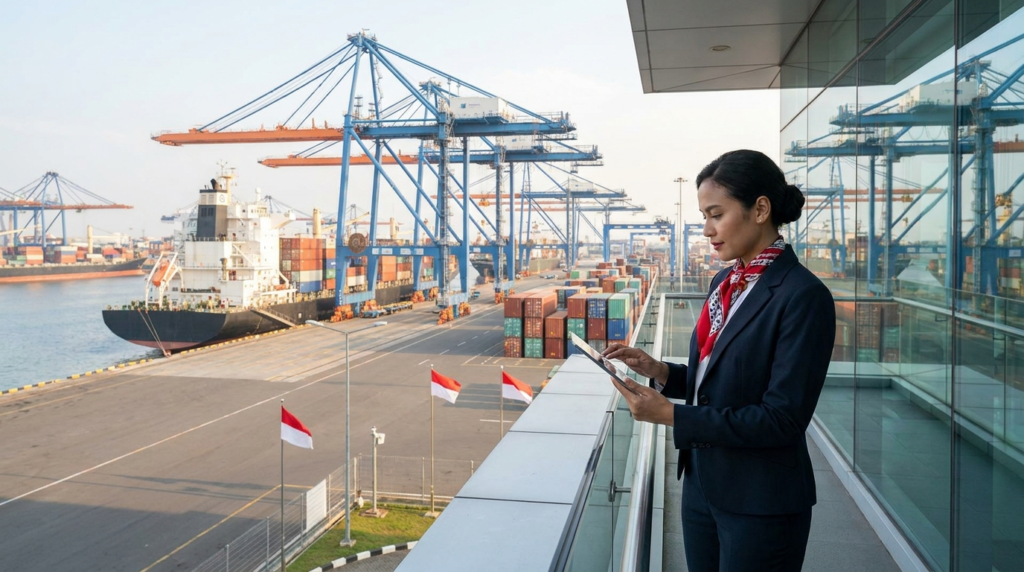
A foreign business can supply products to Indonesia, but the overseas company normally should not assume that its foreign incorporation documents alone allow it to act as the Indonesian importer. The workable structure usually involves an Indonesian-established importer with the appropriate business activities, NIB/API status, customs access, and product-specific approvals. That importer may be a foreign-owned Indonesian company, a local distributor, or another properly appointed Indonesian importing party.
The right route depends on what is being imported, who will own the goods at customs clearance, whether the goods will be resold or used internally, and which registrations must remain with an Indonesian party. This guide explains how foreign companies can structure the decision before committing to production, shipping, or a distributor agreement.
Key Takeaways
- An overseas company generally needs an Indonesian importing party rather than relying on its foreign corporate registration.
- A foreign-owned Indonesian company may be able to import when its legal form, KBLI activities, NIB/API function, customs access, and intended use of the goods align.
- API-U is associated with imports for trade or transfer, while API-P is associated with goods for the importer’s own use and production activities; neither replaces commodity or product approvals.
- Using a local distributor can reduce the need to build an in-house import operation, but it changes control over registrations, inventory, pricing, customer access, and exit planning.
- HS classification should be checked before shipment because import restrictions, permits, surveyor reports, ports of entry, labeling, and product approvals can be commodity-specific.
- The named importer carries customs and regulatory responsibilities even when a customs broker handles the filing.
Can a Foreign Company Import Products into Indonesia?
Yes, but the answer depends on what “foreign company” means. A foreign-owned company incorporated in Indonesia, commonly structured as a PT PMA, is an Indonesian legal entity. It may be able to import products when its licensed activities and import profile support the planned transaction. By contrast, an overseas parent with no Indonesian establishment ordinarily needs an Indonesian importer to undertake the local import and customs process.
Indonesia’s current general import framework requires an importer to hold a Business Identification Number, or NIB, that functions as an Importer Identification Number, or API. The Ministry of Trade framework has been amended since its 2025 issuance, including by Minister of Trade Regulation 18 of 2026. This makes a current, transaction-specific check important.
The practical question is therefore not simply whether foreign ownership is allowed. It is whether the intended Indonesian importer is authorized for the correct business activity, holds the appropriate API function, has effective customs access, and can satisfy the rules applying to the particular goods.

The Three Main Import Structures
1. Import through a foreign-owned Indonesian company
A foreign investor may establish or use a PT PMA as the Indonesian operating entity. This route offers direct control over supplier relationships, landed inventory, sales planning, compliance records, and customer contracts. It can suit businesses that expect sustained market activity and are prepared to maintain a local corporate and compliance function.
However, incorporation is only one layer. The company should select business activities that accurately cover its operational model and confirm that the relevant KBLI classifications are compatible with foreign ownership, import purpose, distribution, and any sector-specific rules. Its risk-based business licensing must also be operationally adequate under Indonesia’s current licensing framework. For help aligning these workstreams, review IndoGateway’s Indonesia import licence support.
2. Import through an Indonesian distributor
An overseas manufacturer can appoint an Indonesian distributor that purchases and imports the goods, clears them through customs, and resells them locally. This can be a practical market-entry route when the manufacturer does not yet need its own import infrastructure. The distributor must still be properly licensed for the activities and goods involved.
The contract should allocate responsibility for product registration, labeling, forecasts, import permits, customs data, recalls, warranty handling, channel development, and regulatory updates. It should also address what happens to registrations, stock, customer data, and authorization letters if the relationship ends. A distributor is not merely a freight solution; it becomes part of the foreign brand’s commercial and compliance architecture.
3. Use a specialized Indonesian importing partner
Some companies use a specialized local importing party for a defined launch, project, or product flow. The exact legal and commercial arrangement matters. The importer cannot simply lend its name while the parties disregard the responsibilities attached to the customs declaration, licences, or product approvals. The named importer should genuinely control and document the transaction within its authorized scope.
This route may help test demand or handle a temporary operational gap, but it needs careful due diligence. Confirm the party’s NIB/API function, customs status, relevant business activities, product permissions, recordkeeping process, commercial role, and ability to support audits or post-entry questions. IndoGateway’s overview of importer-of-record options in Indonesia can help frame the alternatives.

What the Indonesian Importer Needs
The requirements are layered. Treating one registration as a universal import licence is a common and costly planning error.
An appropriate Indonesian business and activity scope
The importing party should have an Indonesian legal and licensing profile that matches what it actually does. Trading, wholesale distribution, manufacturing, and support activities are not interchangeable. A company importing production machinery for its own facility has a different model from a company importing finished goods for resale. The selected KBLI activities, foreign-ownership position, OSS licensing, premises, and operating model should be reviewed together.
NIB functioning as API-U or API-P
Under the general import framework, the NIB functions as the API. API-U generally supports goods imported for trade or transfer, while API-P generally supports goods imported for the importer’s own use, including inputs connected with production. The distinction follows the intended transaction, not the foreign shareholder’s preference. A company should not use an API-P model as an informal substitute for a resale import structure.
The API function is importer identity, not blanket approval for every product. The consolidated rule set should be checked because the Ministry of Trade has amended Minister of Trade Regulation 16 of 2025, including provisions dealing with API changes and import administration.
Customs access and accurate master data
The Directorate General of Customs and Excise states that an importer or exporter with an NIB functioning as company registration, API, and customs access is treated as having completed customs registration, subject to the applicable requirements. Its current customs-registration guidance also emphasizes that OSS NIB data and tax data should be kept current. A mismatch in name, address, tax details, or responsible persons can disrupt the process even when the business concept is sound.
Commodity and product permissions
Some goods can be imported under the general framework, while others are prohibited, restricted, or subject to technical controls. Depending on the HS code and product, the importer may need an import approval, surveyor report, product registration, mandatory SNI evidence, halal documentation, telecom certification, medical-device authorization, quarantine documentation, or another sector instrument. These controls may apply before shipment, at the border, before distribution, or at several stages.
A Step-by-Step Decision Process
- Define the transaction. Identify the goods, manufacturer, seller, buyer, consignee, importer, intended user, sales channel, and transfer of title.
- Classify the goods. Establish a defensible HS classification using specifications, materials, composition, function, and supporting technical documents.
- Check restrictions and product rules. Review the current import-control position through official sources, including the Indonesia National Single Window, and confirm sector approvals with the competent authority.
- Choose the importer model. Compare a PT PMA, a distributor, and a specialized importing partner based on control, scale, registration ownership, tax and customs administration, and exit risk.
- Validate the importer’s authority. Review the entity’s KBLI activities, risk-based business licensing, NIB/API function, customs access, and commodity-specific permissions.
- Confirm product-market access. Determine which labels, local registration holders, testing, certificates, appointment letters, or post-market systems must be ready before the goods move.
- Build the customs file. Align the purchase order, invoice, packing list, transport document, origin evidence, permits, product descriptions, valuation basis, and parties’ identities.
- Run a pre-shipment gate. Do not release the cargo until the importer confirms that required approvals are active and the route, port, quantity, and document conditions are satisfied.
- Maintain post-entry records. Preserve declarations, supporting documents, approvals, calculation records, and inventory information, and monitor changes affecting future shipments.
For a broader operational sequence, see IndoGateway’s guide to importing products into Indonesia.

PT PMA or Local Distributor: How to Choose
| Decision factor | Own Indonesian company | Local distributor or importer |
|---|---|---|
| Control | Greater control over imports, inventory, customers, and compliance records | More operational control sits with the local partner |
| Setup | Requires entity, licensing, tax, customs, staffing, and governance workstreams | Can reduce the need for an immediate in-house importing organization |
| Registrations | The company may hold relevant registrations where eligible | The partner may hold registrations, creating dependency and exit considerations |
| Commercial reach | The company builds its own local route to market | The partner may provide established sales and logistics capacity |
| Economics | Higher fixed operating commitment but more direct margin control | Lower initial infrastructure burden but partner margin and service fees apply |
| Best fit | Long-term market presence, scale, and direct oversight | Market testing, partner-led distribution, or specialized channels |
Neither model is automatically superior. The choice should follow the product, projected shipment frequency, customer model, required registration holder, compliance capability, investment horizon, and negotiation leverage. Companies planning to sell locally should also review the connected route described in IndoGateway’s sell-products solution.
Common Mistakes Foreign Companies Should Avoid
- Shipping before approvals are complete. A permit application in progress is not the same as an active approval that covers the shipment.
- Assuming the freight forwarder is the importer. A carrier, forwarder, or customs broker may facilitate logistics or file a declaration, but that does not automatically make it the authorized owner of the import obligations.
- Using a vague HS code. Commercial names alone are not enough. Classification should reflect technical characteristics and intended function.
- Ignoring the registration holder. Product approvals held by a distributor may be difficult to transfer when the partnership ends.
- Confusing import authority with sales authority. Clearing goods does not by itself establish the right to distribute regulated products or conduct every planned business activity.
- Failing to align documents. Differences in quantity, value, product description, consignee, origin, or permit data can create delays and compliance questions.
- Budgeting only freight and duty. Testing, certification, labeling, warehousing, professional support, demurrage exposure, partner margins, and post-market duties may materially affect the landed model.
Questions to Resolve Before Appointing an Importer
- Who will purchase and own the goods when they enter Indonesia?
- Will the goods be resold, transferred, installed, consumed, or used in production?
- Which HS codes and technical specifications support the classification?
- Which party will hold each product registration and authorization letter?
- Does the importer have the relevant NIB/API function, customs access, KBLI activities, and operating licence status?
- Who controls pricing, inventory, recalls, customer records, and regulatory correspondence?
- What happens to approvals, remaining stock, and customer support if the relationship terminates?
- Which party bears costs caused by inaccurate data, expired approvals, inspection, storage, or re-export?
A written responsibility matrix should connect the commercial agreement with the regulatory process. It should be specific enough that the parties know who prepares each document, who validates it, and who has authority to stop a shipment.
Conclusion
A foreign company can bring products into Indonesia, but it needs a compliant Indonesian import structure. A PT PMA can offer control for a sustained market presence, while a distributor or specialized importer can provide a partner-led route. In every model, the importing party’s corporate activity, NIB/API function, customs access, HS classification, commodity controls, product approvals, and documents must work as one system.
The most useful planning question is not “Can we import?” in the abstract. It is “Which Indonesian party can lawfully import these exact goods for this exact purpose, and what must be complete before shipment?” Answering that question early protects launch timing, commercial leverage, and the integrity of the supply chain.
Regulatory note: Indonesian investment, licensing, tax, immigration, product, environmental and operating requirements may change and may depend on the business activity, ownership structure, location, products and project circumstances. This article provides general information and is not project-specific legal, tax or regulatory advice. Applicable requirements should be verified before implementation.
Plan Your Indonesia Import Route
IndoGateway helps foreign companies assess importer structures, licensing dependencies, product-market access, and shipment readiness as one connected workstream. Contact IndoGateway to discuss your products, planned importer, and route to market before you commit to a shipment or long-term distribution arrangement.
Frequently Asked Questions
1. Can an overseas company with no Indonesian entity be the importer of record?
An overseas company should not assume that its foreign incorporation allows it to act directly as the Indonesian importer. The usual commercial route is to use an appropriately established and authorized Indonesian party, such as a local subsidiary, distributor, or specialized importer. The chosen party should genuinely undertake the import role and hold the necessary NIB/API function, customs access, business activities, and product or commodity permissions. The contract should identify ownership, payment, document, recall, and post-entry responsibilities rather than treating the local party as a name placed on paperwork.
2. Can a PT PMA import and sell products in Indonesia?
A PT PMA may be able to import and sell products when its approved activities, foreign-ownership position, risk-based business licensing, NIB/API function, and customs access support that operating model. Product and sector rules still apply separately. For example, regulated goods may require an Indonesian registration holder, technical approval, testing, labeling, or a commodity-specific import instrument. The company should validate its exact KBLI activities and the goods’ HS codes before concluding that incorporation provides sufficient authority. A PT PMA structure creates a platform, but it does not automatically approve every product or transaction.
3. What is the difference between API-U and API-P for a foreign-owned company?
API-U generally corresponds to importing goods for trade or transfer, whereas API-P generally corresponds to importing goods for the importer’s own use, including inputs associated with production. A foreign-owned Indonesian company should select the function that matches its real activity and transaction flow. It should not treat the labels as interchangeable or assume that either one permits every commodity. The NIB carries the API function, but import approvals, survey requirements, product registration, labeling, and customs obligations may still apply according to the product, HS classification, intended use, origin, and shipment.
4. Does an NIB allow a company to import any product into Indonesia?
No. An NIB functioning as an API establishes the importer-identity layer, and it may connect with customs access under the applicable registration system. It is not universal permission to import any product. Indonesia applies prohibitions, restrictions, commodity controls, technical regulations, and sector approvals that can depend on the HS code and product characteristics. Food, cosmetics, medical devices, electronics, telecom equipment, chemicals, agricultural goods, and products subject to mandatory standards can follow different routes. The importer should complete an item-level restriction and product-compliance check before shipment, not after the cargo reaches the port.
5. Is a customs broker enough to solve the import licensing requirement?
No. A customs broker or PPJK can support preparation and submission of customs declarations within its authorized role, but the broker does not erase the importer’s own regulatory responsibilities. The importer remains central to the accuracy of the declaration, the supporting documents, valuation, classification, permits, and payment of applicable border charges. A foreign company should therefore choose the Indonesian importer first and then confirm how the importer will work with its broker. Broker capability matters, but it is not a substitute for a correctly licensed importer or valid product and commodity approvals.
6. Should a foreign brand use a distributor or establish its own company?
The better route depends on scale, control, product regulation, customer strategy, and the expected duration of the market entry. A distributor can provide established import, logistics, and sales capabilities with less immediate infrastructure. An Indonesian subsidiary can offer greater control over inventory, registrations, pricing, customer data, and long-term channel development, but it requires a broader corporate and compliance commitment. The decision should also account for who will hold product registrations and what happens when a distributor relationship ends. A structured comparison is more reliable than choosing solely on the lowest first-shipment cost.
7. Who should hold the product registration when a distributor imports?
The correct registration holder depends on the product regime and the eligible applicant under the applicable rules. Where a distributor or importer holds the registration, the foreign brand should understand the commercial dependency this creates. The agreement should address use of trademarks and dossiers, renewal duties, regulatory correspondence, adverse-event or recall cooperation, confidentiality, termination, and any available transition process. A promise that a registration can simply be transferred later should not be accepted without verification. Product registration strategy should be designed alongside the importer appointment, not left until the shipment is ready.
8. What documents should be checked before the first shipment?
The file commonly begins with the commercial invoice, packing list, bill of lading or airway bill, purchase documents, product specifications, HS classification support, and evidence of origin where relevant. The importer should also confirm its current NIB/API and customs data, commodity-specific permits, product registrations, certificates, labels, surveyor documents, and any appointment letters required for the goods. Exact requirements vary, so a pre-shipment checklist should be built for each product family and route. Names, addresses, values, quantities, product descriptions, permit references, and consignee details should be consistent across the complete file.