
For a foreign company planning to import into Indonesia, the terms NIB, API-U and API-P describe connected parts of the importer-identity framework, not three interchangeable permits. The practical task is to align the Indonesian importer, its licensed business activities, the commercial purpose of the goods and every product- or shipment-specific control before cargo moves.
This guide explains how that structure works, where each identifier fits and what compliance teams should verify before selecting an import model.
Key Takeaways
- The NIB is the business identification number issued through Indonesia’s OSS system. For importing, the NIB can also function as the holder of an API designation and customs access when the relevant requirements are met.
- API-U generally supports imports intended to be traded or transferred, while API-P generally supports goods imported for the company’s own operational or production needs.
- An NIB that functions as an API is an importer identity. It does not automatically clear every product, HS code or shipment for entry.
- The importer must separately assess commodity controls, product registration, technical verification, customs documentation, labeling and sector approvals.
- The correct route depends on the Indonesian entity’s KBLI activities, the goods, intended use, supply chain, ownership-transfer model and the latest official rules.
The Short Answer: How NIB, API-U and API-P Fit Together
Indonesia’s current general import framework requires an importer conducting business imports to hold a Business Identification Number, or NIB, that is valid as an Importer Identification Number, or API. The API designation carried through the NIB is either API-U or API-P. In practical terms, the NIB identifies the business, the API status identifies the type of importing role, and customs access enables the business to interact with the customs system.
Under Ministry of Trade Regulation 16 of 2025, as amended, API-U is associated with goods imported for trading or transfer, while API-P is associated with goods used by the importer as capital goods, raw materials, auxiliary materials or other inputs supporting its production or business activities. That distinction should reflect the real transaction rather than a preference chosen for administrative convenience.
Most importantly, none of these elements should be read as a blanket product approval. Certain goods may still require an Import Approval, Registered Importer or Producer Importer status, a Surveyor Report, or another sector-specific document. Product rules administered by BPOM, the Ministry of Industry, BPJPH, the Ministry of Health or other authorities may also apply.

What Is an NIB in Indonesia?
The NIB is the registration identity assigned to a business through the Online Single Submission system. It anchors important business data, including the legal entity, address and licensed activities selected through Indonesia’s KBLI classification. For an importing company, the NIB can also serve as its API and customs-access identity once the relevant data and conditions are satisfied.
This makes the NIB foundational, but not conclusive. A company may have an active NIB while still lacking a product-specific approval, import authorization or operational licence required for a particular shipment. Likewise, an entity’s KBLI selections should genuinely support the business model. A company importing machinery for its own factory has a different compliance profile from a wholesale business importing finished goods for resale.
Foreign investors should therefore treat NIB preparation as part of a connected setup process. The legal entity, foreign-ownership position, KBLI activities, OSS risk classification, API choice, customs access, premises, tax data and product approvals should tell one consistent story. IndoGateway’s guide to the NIB, OSS and KBLI relationship provides additional context for this alignment.
What Is API-U?
API-U is the general importer identity for a business importing goods with the purpose of trading or transferring them. It is commonly relevant to distributors, wholesalers, retailers and other businesses that bring products into Indonesia for onward commercial supply. The phrase “traded or transferred” matters because the actual movement of ownership or commercial control is central to the distinction.
An API-U route still needs to match the company’s licensed activities. A foreign-owned Indonesian company should verify that its KBLI codes support the planned distribution, wholesale, retail or other commercial functions and that any foreign-ownership or sector restrictions have been addressed. Product-level obligations remain separate. For example, food, cosmetics, medical devices, telecommunications equipment and products subject to mandatory SNI can each have additional market-access requirements.
API-U therefore answers only part of the question: “Who is importing and for what commercial purpose?” It does not by itself answer: “May this particular product be imported, distributed and sold?” Companies should build those answers through an HS-code and product-compliance assessment before placing purchase orders.

What Is API-P?
API-P is the producer importer identity used for goods brought in for the importer’s own needs, such as capital equipment, raw materials, auxiliary materials or inputs that support production or the company’s business activities. A manufacturer importing machinery and production inputs is the clearest example, although the exact fit must be assessed from the importer, goods and intended use.
The core operational principle is that API-P is not an ordinary resale route. Goods imported under API-P should match the company’s own operational or production requirements. Limited transfers may be allowed only within conditions established by the applicable rules; those exceptions should not be treated as a general distribution right. If the business model depends on selling imported finished goods to third parties, the importer should test whether API-U and the relevant trading activities are the more coherent route.
For industrial projects, API-P planning should connect with factory readiness, industrial licensing, machinery specifications, production capacity, raw-material forecasts and any used-capital-goods controls. Companies evaluating an Indonesian production footprint can also review IndoGateway’s manufacturing market-entry support and used machinery import permit service.
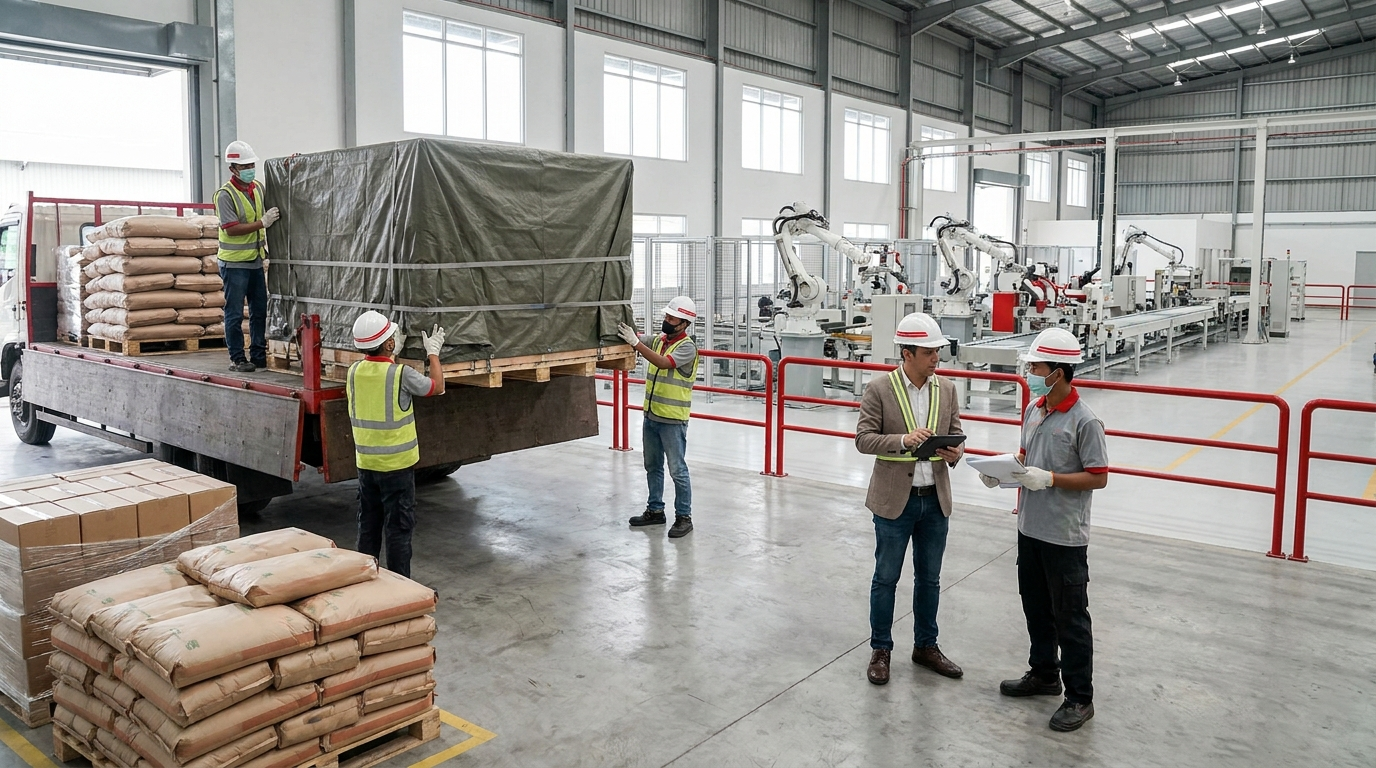
API-U vs API-P: A Practical Comparison
| Question | API-U | API-P |
|---|---|---|
| Primary purpose | Importing goods for trading or transfer | Importing goods for the importer’s own operational or production needs |
| Typical operating model | Distribution, wholesale, retail or commercial supply | Manufacturing, processing or business operations using imported inputs or equipment |
| Business-activity alignment | Trading and distribution activities should support the model | Production or operating activities should support the intended use |
| Ordinary resale | Generally consistent with the purpose, subject to product and sector rules | Not the ordinary purpose; any permitted transfer requires rule-specific verification |
| Additional controls | Both routes may require commodity permissions, product registration, technical verification, labeling, customs and sector documents | |
This comparison is a planning aid, not an eligibility determination. The current regulation and any sector-specific instrument should be checked against the transaction before the importer commits to a route.
Five Compliance Layers Beyond the API Designation
1. Business and KBLI alignment
The Indonesian entity’s deed, OSS data and KBLI activities should cover what it will actually do: manufacture, distribute, wholesale, retail or use imported goods internally. A mismatch can affect licensing, foreign-ownership analysis and the credibility of the import plan.
2. Customs registration and access
The Directorate General of Customs and Excise explains that a service user must complete customs registration to meet customs obligations. Importers and exporters are treated as registered when their NIB is valid as a company registration identity, API and customs access. The official customs registration guidance should be checked for current procedural details.
3. HS classification and commodity controls
The HS classification affects duties, taxes, restrictions and document requirements. Classification should be supported by technical specifications, composition, function and product literature. Guessing from a commercial name can lead to the wrong regulatory route.
4. Product and sector market access
Depending on the goods, requirements may include BPOM registration, mandatory SNI, halal obligations, medical-device approvals, telecommunications certification, labeling or other sector conditions. These obligations can attach to the product and local applicant even where the importer already has an NIB and API.
5. Shipment-level documentation
Commercial invoices, packing lists, transport documents, certificates of origin, customs declarations and any required import approvals or survey reports should be consistent. The Indonesia National Single Window is an important official reference for border processes and commodity restrictions.
How to Choose the Right Import Structure
- Map the transaction. Identify the seller, buyer, importer of record, owner of the goods at each stage and final customer or internal user.
- Define the goods precisely. Assemble specifications, composition, intended use, brand ownership, country of origin and candidate HS classifications.
- Test the Indonesian entity. Confirm that its legal scope, KBLI activities, ownership position, OSS licences and tax profile support the planned function.
- Select API-U or API-P based on substance. Use the intended commercial treatment of the imported goods, not simply whichever route appears faster.
- Run a restriction check. Determine whether the goods require import business licensing, technical verification, product registration, certification, labeling or special customs treatment.
- Build the document matrix. Assign responsibility for every licence, product file, supplier document and shipment document, including validity dates and data consistency.
- Validate before dispatch. Recheck the current official rules, approval status and document set before the goods enter the customs territory.
Where the foreign company does not yet have a suitable Indonesian entity, alternatives may include appointing a properly licensed local importer or using an appropriate importer-of-record arrangement. The contractual allocation of title, regulatory responsibility, warranty, recall and after-sales obligations should be documented. Read more about importer-of-record options in Indonesia.
Can a Company Change from API-U to API-P?
Ministry of Trade Regulation 37 of 2025 expressly provides a mechanism for changing an NIB valid as API-U into an NIB valid as API-P, subject to stated conditions. Those conditions address whether the importer holds import business licensing, a certificate or a surveyor report that remains valid and, where such documents exist, whether an import is being realized.
A company should not assume that a change is a simple profile toggle or that a reverse change follows the same route. Before applying, it should review open purchase orders, goods in transit, active import approvals, surveyor processes, customs declarations and the continuing validity of its OSS activities. A poorly timed change can create inconsistency between the importer profile and live transactions.
The framework was subsequently amended by Ministry of Trade Regulation 18 of 2026. Any planned change should therefore be checked against the consolidated rules and the current OSS workflow rather than relying on an older guide.
Common Mistakes Foreign Companies Should Avoid
- Treating the NIB as a universal import permit. It is foundational business and importer identification, but controlled goods may need further documents.
- Choosing API-P while planning ordinary resale. The importer role should reflect the real use and ownership-transfer model.
- Choosing API-U without supporting trading activities. The company’s KBLI and operational licences must fit what it will do in Indonesia.
- Shipping before product approvals are complete. Supplier readiness is not the same as Indonesian market-access readiness.
- Classifying by product nickname. HS analysis needs technical evidence and may materially change the applicable controls.
- Ignoring data consistency. Company names, addresses, product descriptions, quantities and approval references should align across commercial, licensing and customs records.
- Changing API status during an active transaction without analysis. Open approvals and shipments should be reviewed first.
A Pre-Shipment Readiness Checklist
- Indonesian importer and importer-of-record responsibility confirmed
- NIB data and relevant KBLI activities verified
- API-U or API-P designation matched to the actual transaction
- Customs access confirmed
- HS classification supported by technical documents
- Current prohibited and restricted-goods rules checked
- Import approvals, importer status and surveyor obligations assessed
- Product registration, certification and labeling completed where applicable
- Invoice, packing list, transport document and origin evidence aligned
- Customs broker instructions and responsibility matrix approved
- Post-entry records, distribution controls and renewal dates assigned
For an integrated review of importer setup, product controls and shipment readiness, see IndoGateway’s import and product compliance services and Indonesia import licence support.
Frequently Asked Questions
1. Is an NIB the same thing as an import licence in Indonesia?
No. The NIB is the business identification number issued through OSS and can function as the holder of an API designation and customs access when the required elements are satisfied. In everyday conversation it is sometimes called an import licence, but that shorthand can be misleading. Controlled goods may still require an Import Approval, Registered Importer or Producer Importer status, a Surveyor Report, product registration, certification or another sector document. The correct document set depends on the importer, HS classification, product, origin, intended use and transaction.
2. What is the main difference between API-U and API-P?
The main difference is the intended commercial treatment of the goods. API-U generally applies when a business imports goods to trade or transfer them, such as through distribution or wholesale. API-P generally applies when a business imports capital goods, raw materials, auxiliary materials or other items for its own production or operations. That distinction must be consistent with the Indonesian entity’s licensed activities and the real supply chain. Neither designation removes product-specific requirements, customs obligations or restrictions that apply to particular goods.
3. Can an API-P holder sell imported goods to customers?
API-P is not designed as the ordinary route for importing finished goods for resale. Its primary purpose is to support the importer’s own production or business activities. The rules may recognize limited transfer situations under specific conditions, but those should be verified against the exact goods, circumstances and current regulation rather than treated as a broad right to distribute. If planned revenue depends on routine sales of imported goods, the company should assess an API-U structure, appropriate trading KBLI activities and all product-market-access obligations before implementing the model.
4. Does API-U allow a company to import every type of product?
No. API-U identifies the importer as operating under a general trading or transfer purpose; it does not override prohibited and restricted-goods rules or sector regulation. A product may require an Import Approval, technical verification, BPOM registration, mandatory SNI certification, halal compliance, medical-device authorization, telecommunications certification or other documentation. Eligibility can also depend on the importer’s KBLI activities and any importer-specific status required for that commodity. Companies should complete an HS-code, commodity-control and product-compliance review before orders are finalized or cargo is dispatched.
5. Can a foreign company use its overseas entity as the importer?
An overseas company should not assume it can act directly as the Indonesian importer merely because it owns the goods or sells them to Indonesian customers. Business imports generally require an appropriately established and registered Indonesian importer with the necessary NIB, API function, customs access, business activities and commodity or product approvals. A foreign group may use its Indonesian subsidiary or appoint a properly licensed local importer, depending on the operating model. Contract terms should clearly allocate title, customs responsibility, product compliance, recalls, warranties and post-market obligations.
6. How do customs access and the API designation relate?
They are connected but conceptually different. The API designation identifies the business as an importer and distinguishes the API-U or API-P role. Customs access enables interaction with customs processes and fulfillment of customs obligations. Official Customs guidance states that importers or exporters are treated as having completed customs registration after holding an NIB valid as company registration, API and customs access. In practice, teams should confirm that all functions are active and that the entity’s tax, OSS and customs data are aligned before a shipment is booked.
7. How long does it take to obtain an NIB and become import-ready?
There is no responsible universal timeline for full import readiness. Generating or updating core OSS data can be only one part of the project. The overall schedule may depend on corporate records, KBLI analysis, OSS risk-based licences, tax status, customs access, import business licensing, technical recommendations, product registration, testing, labeling, surveyor arrangements and authority review. Product and sector approvals can become the critical path. A reliable plan should begin with the exact products, HS classifications and importer structure, then sequence approvals before supplier production and shipping commitments.
8. What should a company verify before its first shipment?
Before the first shipment, verify the Indonesian importer’s identity, NIB data, API-U or API-P designation, customs access and supporting KBLI activities. Confirm the HS classification with technical evidence, then check current commodity restrictions, import approvals, surveyor requirements, product registration, certification, labeling and origin documentation. Reconcile the commercial invoice, packing list, transport document and approval data, and give the customs broker written instructions. Finally, confirm who owns post-entry recordkeeping, distribution controls, renewal tracking, complaints and recalls after the goods clear customs.
Conclusion
Indonesia’s import licensing structure is easiest to understand as a sequence. The NIB identifies the business, the API-U or API-P designation expresses its importer role, and customs access enables customs interaction. Commodity permissions, product registrations and shipment documents then determine whether specific goods can move through the chosen route.
Foreign companies reduce risk when they design the entity, KBLI, importer identity, product compliance and supply chain together. The right question is not simply “Which API do we need?” but “Which licensed Indonesian importer, commercial purpose and product-approval pathway accurately match this transaction?”
Plan Your Indonesia Import Route
IndoGateway can help assess the Indonesian importer, NIB and API structure, HS and commodity controls, product approvals and pre-shipment documentation as one coordinated workstream. Contact IndoGateway to build a practical import-readiness plan for your products and operating model.