
Product certification in Indonesia is not a single approval. A product may fall under BPOM market authorization, mandatory SNI conformity assessment, halal certification, a sector-specific approval, import controls, or several of these workstreams at the same time. The practical task is to classify the product accurately, identify the responsible Indonesian applicant, and sequence every requirement before commercial shipments begin.
For foreign manufacturers and brand owners, that sequencing matters. A certificate held by the factory overseas may support an Indonesian application, but it does not automatically replace an Indonesian approval. The product, claims, composition, intended use, HS classification, manufacturing site, local importer or registration holder, and sales model can all change the route.
Key Takeaways
- Start with product classification, not with the name of a certificate. Similar-looking goods can sit under different authorities because of their intended use, ingredients, claims, or technical characteristics.
- BPOM, mandatory SNI, halal, medical-device, telecommunications, and other sector approvals are separate regimes. More than one may apply to the same product.
- An Indonesian entity usually needs to perform the relevant applicant, registration-holder, importer, or distributor role. Decide that role before filing because changing it later can affect approvals and commercial control.
- Certification should be planned alongside the import and product compliance workstream, labeling, customs documentation, and launch timing.
- Do not manufacture final Indonesia-specific packaging or ship commercial inventory until the applicable approval route and permitted claims have been confirmed.
What Does Product Certification Mean in Indonesia?
“Product certification” is a useful commercial umbrella term, but Indonesian law and agency systems use more specific instruments. Depending on the goods, the relevant output might be a marketing authorization, product notification, conformity certificate, halal certificate, registration number, technical approval, or permit supporting a business activity. These instruments answer different questions.
BPOM focuses on regulated categories such as processed food, medicines, traditional medicines, supplements, and cosmetics. The BPOM public-services portal lists separate registration and notification services for these groups. SNI concerns conformity with Indonesian national standards, although an SNI only becomes a compulsory market-access requirement when a competent authority makes it mandatory through a product-specific technical regulation. Halal certification addresses compliance with Indonesia’s halal-product assurance framework. Sector regulators separately govern products such as medical devices and telecommunications equipment.
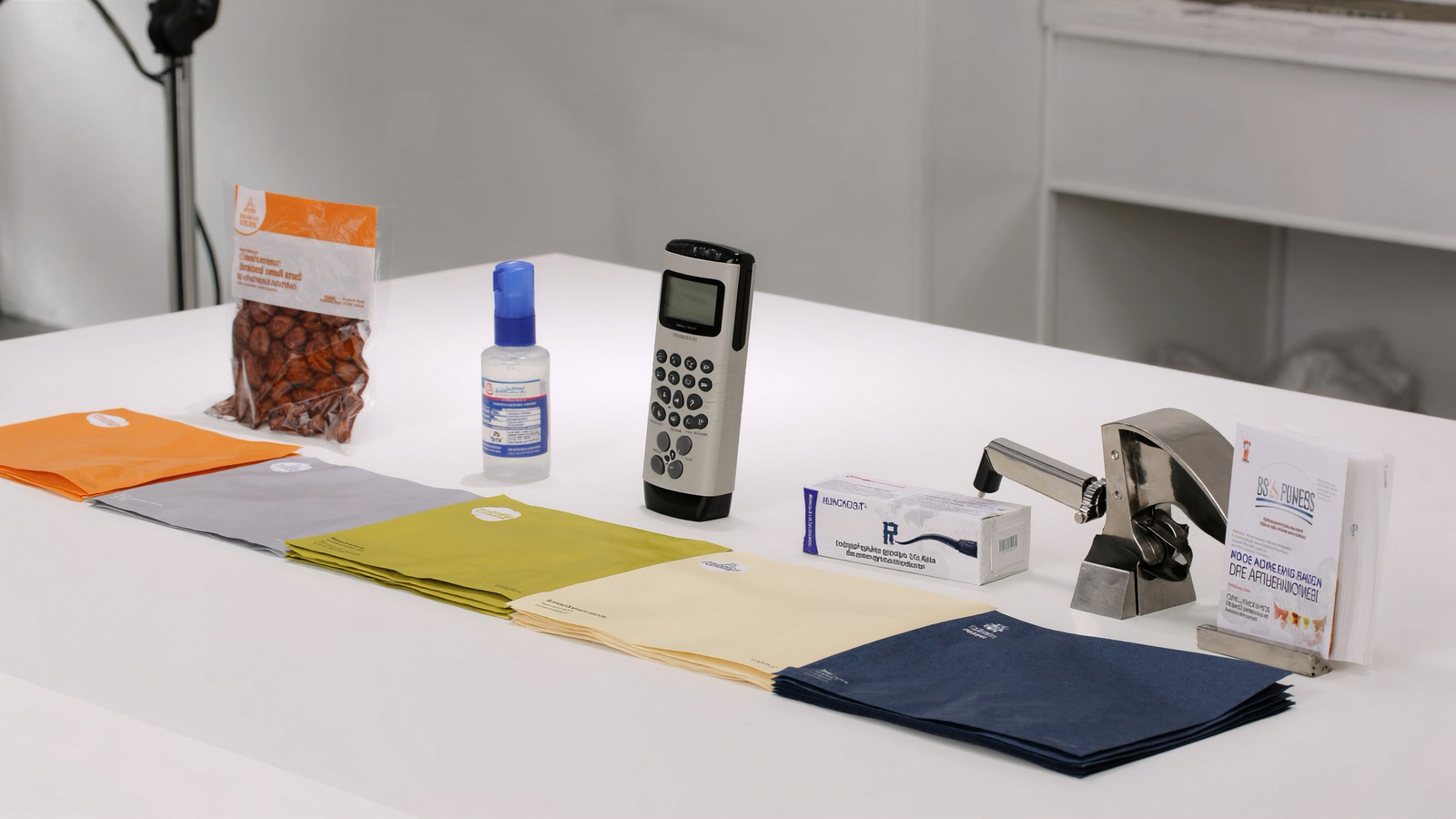
The result is a layered system. A connected kitchen appliance, for example, could require analysis of electrical-product standards, wireless-device certification, labeling, import restrictions, and halal scope for certain materials or product categories. This does not mean every layer necessarily applies; it means the assessment must test each layer rather than assume one certificate solves all of them.
The Main Product Approval Workstreams
BPOM Registration and Notification
BPOM is the central authority for several food, medicine, supplement, traditional-medicine, and cosmetics categories. The precise procedure depends on classification. Processed food uses a registration route, while cosmetics generally use a notification system. Other BPOM-regulated products have their own evaluation pathways, technical dossiers, facility evidence, appointment documents, and post-market obligations.
Imported products also raise a registration-holder question. BPOM guidance for imported processed food identifies an importer or distributor appointed by the overseas company as the applicant. Guidance for traditional medicines and supplements similarly describes eligible Indonesian business actors and specific registration systems. Foreign brands should therefore assess the local holder’s eligibility, licence scope, appointment rights, data access, and exit provisions before submitting a dossier. IndoGateway’s pages on BPOM food registration and cosmetic registration provide focused starting points.
SNI and Conformity Assessment
SNI is Indonesia’s national standards framework. Under Law No. 20 of 2014 on Standardization and Conformity Assessment, the system covers standards, conformity assessment, accreditation, supervision, and related institutions. The existence of an SNI for a product does not, by itself, establish that certification is compulsory. Mandatory application depends on the current technical regulation issued by the competent ministry or agency.
Where SNI is mandatory, the route may involve an Indonesian product-certification body, product testing, factory assessment, surveillance, marking, and registration steps specified by the applicable scheme. The Ministry of Trade explains that the Nomor Pendaftaran Barang, or NPB, functions as a traceability identity for goods subject to mandatory SNI or technical requirements. Its current guidance also identifies product-category exceptions and links NPB to the underlying conformity document. Companies should therefore verify the exact regulated product scope, SNI edition, scheme, recognized conformity-assessment body, applicant, factory, model grouping, and NPB treatment rather than relying on a general mandatory-product list. See IndoGateway’s SNI certification support for this workstream.
Halal Certification
Indonesia’s halal framework is administered by BPJPH and is being implemented in phases across defined product categories. BPJPH’s 2026 public guidance describes an October 2026 stage covering multiple categories and imported goods, while BPJPH Regulation No. 4 of 2026 addresses confirmation of conformity for foreign halal products entering Indonesia. Because the current treatment can depend on the product category, origin, foreign certificate, recognition arrangements, ingredients, and Indonesian representative, a foreign certificate should not be assumed to be self-executing in Indonesia.
The halal workstream should cover ingredients and processing aids, the factory and production process, supply-chain separation, the route for a domestic or recognized foreign certificate, Indonesian registration or confirmation, and labeling. It should also be coordinated with BPOM submissions because product names, formulas, manufacturers, and claims should remain consistent across files. IndoGateway provides dedicated guidance on halal certification in Indonesia and overseas halal recognition.
Medical Devices and Household Health Products
Medical devices, in-vitro diagnostics, and certain household health products follow Ministry of Health systems rather than ordinary BPOM consumer-product registration. The official Regalkes portal states that its online service supports marketing authorizations for medical devices and household health supplies. The route may depend on product classification and risk, the overseas manufacturer, the Indonesian authorization holder or distributor, technical evidence, quality-system documentation, and local distribution permissions.
Classification deserves particular care. A wellness item can become a medical device if its intended use or claims bring it within a medical-device definition, while a bundled system may contain components with different regulatory treatment. Foreign manufacturers should align the device description, labeling, model family, instructions for use, certificates, test evidence, appointment, importer, and after-sales arrangements before filing. IndoGateway’s medical-device registration service explains this specialized route.
Telecommunications and Connected Products
Products that transmit, receive, or use telecommunications functions may require certification through the telecommunications equipment system administered by Indonesia’s digital communications authority. The official e-Sertifikasi procedure page sets out the current application flow, while its requirements page addresses technical documents, test reports, product photographs, declarations, and applicant conditions for certain foreign-brand arrangements.
This workstream can overlap with SNI, import, and consumer-label requirements. A product’s radio module, frequency use, model variants, software configuration, test-report origin, and Indonesian representative can affect the filing. A certificate for a module may not automatically settle the finished product’s position. Assess the actual marketed configuration and use IndoGateway’s telecommunications equipment certification support where appropriate.
Other Sector Approvals
Additional controls may apply to toys, chemicals, energy products, automotive components, measuring instruments, agricultural inputs, animal products, electrical goods, construction materials, and other regulated categories. Indonesia’s OSS PB UMKU directory is a useful cross-sector inventory, but it is not a substitute for product-level legal analysis. An OSS listing may connect an approval to particular business activities, while the technical regulation may set product, facility, applicant, or testing conditions.

How to Determine Which Approvals Apply
A defensible classification memo should connect commercial facts to regulatory categories. Begin with the product as it will actually be marketed in Indonesia, not a generic global family description. Review the full ingredient or bill-of-materials data, intended use, users, claims, packaging, instructions, power and radio characteristics, accessories, manufacturing site, and product variants.
- Define the product and every variant. Record formulas, sizes, models, accessories, packaging formats, and factories. Determine whether variants can share an application or require separate treatment under the relevant regime.
- Confirm intended use and claims. Marketing language can change classification. Medical, therapeutic, health, nutrition, disinfectant, safety, environmental, or performance claims should be reviewed before labels and campaigns are finalized.
- Map authorities and instruments. Test BPOM, mandatory SNI, halal, medical-device, telecommunications, trade, industry, and other sector regimes independently. Document why each is applicable, not applicable, or still uncertain.
- Identify the Indonesian applicant. Confirm the company’s KBLI activities, NIB and business licences, importer function, appointment, distribution permissions, facilities, and ability to hold the relevant approval.
- Verify technical evidence. Match test reports, quality certificates, free-sale documents, factory records, formula data, declarations, and artwork to the Indonesian application. Check document legalization or translation requirements only against the current procedure.
- Coordinate import and labeling. Link approvals to HS classification, commodity restrictions, pre-shipment controls, customs data, Indonesian-language information, mandatory marks, and the intended shipment date.
Choose the Indonesian Approval Holder Carefully
The local holder is not merely an administrative convenience. Depending on the regime, it may control renewals, variations, post-market reporting, product releases, regulator communication, and the practical ability to import or distribute. A foreign brand that appoints a distributor should define ownership and access to the technical dossier, permitted territories and channels, confidentiality, adverse-event or complaint handling, recall cooperation, change notification, renewal duties, and transition assistance.
There are generally three commercial structures to assess: use the brand’s own Indonesian company where it is eligible; appoint a distributor or specialist registration holder; or separate registration-holder, importer, and distributor roles where the applicable rules allow it. The right structure depends on the product and the governing system. It should also align with the broader plan to sell products legally in Indonesia.
A Practical Product Certification Process
| Stage | Key output | Critical decision |
|---|---|---|
| 1. Product scoping | Complete product and variant data pack | What exactly will be sold and claimed? |
| 2. Regulatory mapping | Approval matrix by product and authority | Which requirements apply separately or cumulatively? |
| 3. Holder design | Confirmed applicant, importer, and distributor roles | Who is eligible and who controls the approval? |
| 4. Gap assessment | Evidence and testing plan | Can existing global files be used, or is local work required? |
| 5. Submission | Consistent applications and responses | Are product data, factory data, claims, and artwork aligned? |
| 6. Launch readiness | Approved labels, import documents, and release controls | Can the approved product be imported and sold through the planned channel? |
| 7. Maintenance | Change-control and renewal calendar | Which changes require notification, variation, or a new approval? |
Timelines should be built from the applicable route, not a generic estimate. Testing availability, factory audit scheduling, dossier gaps, translations, authority questions, foreign-document verification, recognition status, applicant readiness, and product changes can all affect completion. A launch plan should therefore include dependencies and decision gates rather than a single promised approval date.

Common Mistakes Foreign Brands Should Avoid
- Assuming one approval covers the whole product. A BPOM number does not resolve an unrelated radio, halal, import, or mandatory-standard requirement.
- Using an imprecise product description. Classification based on a short sales name can miss ingredients, intended-use claims, wireless functions, or bundled components.
- Choosing the holder too late. Filing through a short-term distributor without transition protections can create commercial and regulatory dependence.
- Treating foreign reports as automatically accepted. The applicable scheme determines the accepted standard, laboratory, report format, sample, model coverage, and validity.
- Freezing artwork before approval mapping. Indonesian wording, marks, registration numbers, warnings, ingredients, claims, importer details, and halal information may affect the final label.
- Shipping before all release conditions are satisfied. A submitted application is not equivalent to an issued approval, and a product authorization does not necessarily complete import formalities.
- Ignoring post-market obligations. Complaints, adverse events, recalls, surveillance, factory changes, formula changes, label changes, renewals, and holder changes need controlled procedures.
Product Certification Checklist for Foreign Companies
- Prepare a master list of products, variants, factories, ingredients or materials, intended uses, claims, and technical functions.
- Determine the HS classification for import planning separately from the regulatory product classification.
- Confirm the current BPOM, SNI, halal, medical-device, telecommunications, and other sector positions for each SKU.
- Verify the Indonesian applicant’s legal entity, KBLI, NIB, licences, facilities, importer status, appointment, and distribution scope.
- Map every required certificate, authorization, registration, test, audit, label element, and shipment document.
- Reconcile product names, models, formulas, manufacturer addresses, claims, and holder details across all dossiers.
- Build a dependency-based submission plan and do not lock commercial launch dates until critical approvals are sufficiently advanced.
- Create change-control, renewal, complaint, recall, and post-market responsibilities before the first sale.
Frequently Asked Questions
1. Does every product sold in Indonesia need product certification?
No. Indonesia does not impose one universal product certificate on every item. The applicable requirement depends on the product’s classification, ingredients or materials, intended use, claims, technical characteristics, risk, and route to market. Some products need a BPOM authorization or notification; some fall under a mandatory SNI technical regulation; others require halal, medical-device, telecommunications, or another sector approval. Certain goods may not need a product-specific pre-market certificate but can still face business-licensing, import, labeling, consumer-protection, or post-market duties. A product-level assessment is therefore necessary before importing or selling.
2. Is BPOM registration the same as product certification?
Not exactly. BPOM registration or notification is one form of Indonesian market authorization for categories under BPOM’s authority, including relevant processed foods, medicines, traditional medicines, supplements, and cosmetics. “Product certification” is broader commercial language that can also cover mandatory SNI conformity assessment, halal certification, medical-device authorization, telecommunications certification, and other sector instruments. A BPOM approval does not automatically satisfy an unrelated standard, halal, wireless, customs, or import requirement. The company should map all applicable regimes and ensure that product names, formulas, claims, manufacturers, holders, and labels stay consistent across them.
3. How can a company tell whether SNI is mandatory for its product?
Check whether a competent Indonesian ministry or agency has made a specific SNI compulsory for the exact product through a current technical regulation. Finding an SNI in the standards catalogue is not enough because standards can be voluntary unless mandatory application has been established. The assessment should confirm product scope, exclusions, HS references where used, the cited SNI edition, the conformity-assessment scheme, recognized testing and certification bodies, marking, surveillance, factory coverage, and any NPB requirement. Product design and model details should be compared with the regulation rather than relying only on a commercial product name or an old online list.
4. Can an overseas test report or certificate be used in Indonesia?
Sometimes, but acceptance is regime- and scheme-specific. The relevant authority or certification scheme may require a particular standard edition, accredited or recognized laboratory, report format, sample configuration, language, validity period, or relationship between the tested model and the marketed product. Recognition arrangements can also differ by sector. A foreign report may reduce duplicate work when it satisfies the Indonesian route, yet it should never be assumed sufficient without checking the current rule and the intended certification body. Review the complete evidence package before selecting samples, commissioning new tests, or promising a launch date.
5. Who should hold the Indonesian product approval?
The eligible holder depends on the approval system and the company’s operating model. It may be the foreign brand’s Indonesian subsidiary, an appointed importer or distributor, or a specialized local registration holder, provided that the entity satisfies the relevant legal, business-licensing, appointment, facility, and sector requirements. The choice has long-term consequences because the holder may manage renewals, variations, authority correspondence, imports, complaints, recalls, and post-market reporting. Agreements should address dossier access, data confidentiality, commercial channels, regulatory cooperation, change control, termination, and transition so that replacing a partner does not unexpectedly interrupt market access.
6. Can the same Indonesian company hold BPOM, SNI, halal, and sector approvals?
Potentially, but there is no universal answer. Each regime has its own applicant criteria, permitted activities, appointment rules, facility or quality requirements, and connection to the product, manufacturer, importer, or distributor. A company eligible to register one BPOM category may not automatically qualify as the holder for a medical device or telecommunications product. Likewise, the party named on a conformity certificate may need alignment with the importer and NPB records. The proposed entity should be tested against every applicable approval separately, then the roles should be reconciled into one workable import, distribution, and post-market structure.
7. Should certification be completed before products are shipped to Indonesia?
For commercial shipments, the company should confirm and satisfy every approval and import condition that must exist before entry, customs release, distribution, or sale. The timing varies by product and instrument, so a pending application should not be treated as an issued approval. Some evaluation work may require samples or use a specific non-commercial import mechanism, but that exception should be verified for the relevant authority and transaction. A reliable launch gate checks issued approvals, approved artwork, importer eligibility, commodity restrictions, shipment documents, labeling, and customs data before the goods leave the origin country.
8. What happens when the product, factory, label, or Indonesian holder changes?
The regulatory impact depends on the approval and the nature of the change. A new formula, material, claim, intended use, model, radio component, manufacturing site, brand, package, label, importer, distributor, or approval holder may require notification, a variation, additional testing, certificate amendment, transfer where permitted, or a new application. Some changes may also affect halal status, model grouping, SNI surveillance, customs records, or post-market documentation. Establish change control that requires regulatory review before commercial implementation, and keep a current renewal calendar and master data file for every Indonesian authorization.
Conclusion
Product certification in Indonesia is best managed as a coordinated market-access program, not a collection of isolated filings. Accurate classification comes first. The company then needs a suitable Indonesian holder, a verified evidence plan, aligned applications, import-ready documentation, compliant labels, and a post-market operating model. BPOM, mandatory SNI, halal, medical-device, telecommunications, and other sector routes should be assessed independently and then combined into one launch plan.
The practical objective is not simply to obtain a certificate. It is to ensure that the approved product, named manufacturer, Indonesian holder, importer, labels, claims, shipment records, and sales channels all describe the same lawful commercial arrangement.
Plan Your Indonesia Product Approval Route
IndoGateway can help foreign brands map product classifications, Indonesian holder options, registrations, certification, import dependencies, and launch controls. Contact IndoGateway to discuss a product-specific market-access plan before committing to testing, packaging, appointments, or commercial shipments.