
An Indonesia market entry checklist should help management decide whether to invest, how to enter and what evidence is still missing. It should not begin and end with market size. A credible investment case connects demand with channel economics, regulatory feasibility, product access, tax, people, capital and the practical route to the first compliant sale.
The following 20 questions form a pre-investment review for foreign companies. They are designed for a cross-functional workshop involving commercial, finance, legal, tax, supply-chain, product, HR and executive owners. The output should be a decision record with assumptions, evidence, owners and conditions for proceeding.
Key Takeaways
- Validate a specific customer problem and route to revenue, not only top-down market potential.
- Confirm regulatory feasibility before committing to customers, partners, premises or shipment dates.
- Compare distributor, PT PMA and phased models using total economics, control and transition risk.
- Identify which assumptions could make the investment fail and test those first.
- Approve investment in stages, with measurable evidence for each next commitment.
How to Run the Pre-Investment Review
Give every question one of four ratings: supported, partly supported, unsupported or not applicable. Attach evidence and a named owner. A source, signed customer letter, regulator output, distributor diligence file or tested financial model is evidence; confidence alone is not. Identify “fatal assumptions” that would invalidate the model, such as an unavailable licence, an ineligible registration holder or customer economics below the investment hurdle.
Run the review before the board approves irreversible commitments, then repeat it before entity formation, partner appointment and launch. New information about product classification, location, ownership or transaction flows can change earlier conclusions. Regulatory requirements can also change, so time-sensitive findings need a source date and a refresh owner.
Market and Customer Questions
1. Which customer problem are we solving?
Define the problem for a specific buyer and user, including its frequency, cost and current alternatives. Separate an interesting product reaction from a purchase-worthy need. Interview customers across relevant segments and document how procurement, budgeting and approval actually work. The answer should explain why the offer matters in Indonesia, not simply why it succeeded elsewhere.
2. Who is the economic buyer and how do they purchase?
Map decision-makers, influencers, procurement requirements, tender cycles, vendor registration, payment terms and contracting preferences. Determine whether customers buy directly, through distributors, marketplaces, systems integrators or local agents. This affects the required local capabilities and working capital. A sales forecast based on end users can be misleading if an intermediary controls market access.
3. What evidence supports the demand forecast?
Use bottom-up evidence such as qualified accounts, realistic conversion, reorder behavior, distributor pipelines and achievable capacity. Challenge letters of interest and non-binding forecasts. Build conservative, expected and upside cases, then state which assumptions drive the difference. External market reports can provide context, but they should not replace customer-level evidence or a clear method.
4. How will the offer be localized?
Assess product configuration, language, labels, packaging, service, payment methods, implementation, warranty and support. Localization may change cost, product classification or regulatory documentation. Decide which adaptations are essential for compliance, which improve adoption, and which can wait. Assign ownership for maintaining local materials as the global product changes.
5. What will make customers choose us?
Identify defensible advantages in outcome, reliability, channel, service, integration, price or trust. Compare against local and international competitors in the customer’s actual buying process. Imported prestige or a global brand may not overcome slower delivery, weak support or an unfavorable total cost. Convert the advantage into sales proof, operating requirements and measurable win-loss hypotheses.

Entry Model and Partner Questions
6. Do we need a distributor, a PT PMA or a phased model?
Compare the capabilities required for sales, contracting, invoicing, importing, product approvals, inventory, service and employment. A distributor may offer reach and infrastructure; a PT PMA can support direct control and long-term capability; a phased model can preserve options. Verify that each proposed route is legally and operationally feasible for the activities and products.
7. What must remain under our control?
List non-negotiable assets and decisions: customer data, brand, pricing, technical files, regulatory dossiers, quality events, inventory, digital accounts, employees and cash. Then determine how the chosen model protects them. Control should be practical, not merely stated in a contract. Confirm access, system permissions, copies, reporting and enforceable transition mechanisms.
8. How will we select and govern local partners?
Define partner criteria before meetings create momentum. Verify corporate identity, licences, financial resilience, facilities, staff, portfolio conflicts, coverage, systems, compliance and references. Use pilots and measurable milestones where feasible. The contract should cover reporting, audit, anti-bribery expectations, sub-partners, product obligations, performance, termination and business continuity.
9. What happens if the first partner underperforms?
Model the replacement before appointment. Ask who controls product registrations, inventory, customer records, marketing assets, web domains, warranty cases and pending orders. Check whether approvals can be transferred or must be re-obtained. Build contractual and operational handover steps, recognizing that regulatory continuity may depend on product-specific rules rather than contractual language alone.
Regulatory and Product Questions
10. What activities will be performed in Indonesia?
List every revenue and supporting activity, including marketing, wholesale, retail, consulting, software, repair, installation, warehousing and manufacturing. Map them to relevant business classifications and locations. BPS has released KBLI 2025, while transition can vary across systems. Verify the operative classification, foreign-investment position and sector conditions for the project.
11. What does OSS require for each activity?
Indonesia’s OSS portal uses risk-based business licensing and the NIB as a business identity. Review the risk classification and system output for each activity, including any standards, licences, verifications or commitments. Do not assume the NIB completes all requirements. Sector, product, location, environmental, building and technical approvals may also apply.
12. Can our products lawfully enter and be sold?
Assess each SKU using its composition, intended use, claims, HS classification, origin, labels and channel. Identify registration, notification, certification, testing, halal, SNI, import and distribution requirements that may apply. Confirm the eligible applicant or licence holder and the expected dossier. IndoGateway’s import and product compliance service covers this connected analysis.
13. Who will import and hold product approvals?
Choose the importer and approval holder deliberately. Confirm eligibility, data access, responsibilities, renewal, variation, quality reporting and termination. For relevant products, BPOM operates category-specific registration and import systems, while BPJPH provides official halal certification information. Product-specific rules should be verified before agreements or shipments.
14. Are the location and premises suitable?
Distinguish registered office, commercial office, warehouse, service site and factory requirements. Verify zoning, building, environmental, landlord, safety and sector suitability before signing a long lease or beginning fit-out. The applicable approvals may depend on location, land and building status, project scale, activity and environmental impact. Include utilities, logistics access and future expansion in the operational review.
Economics, Tax and Funding Questions
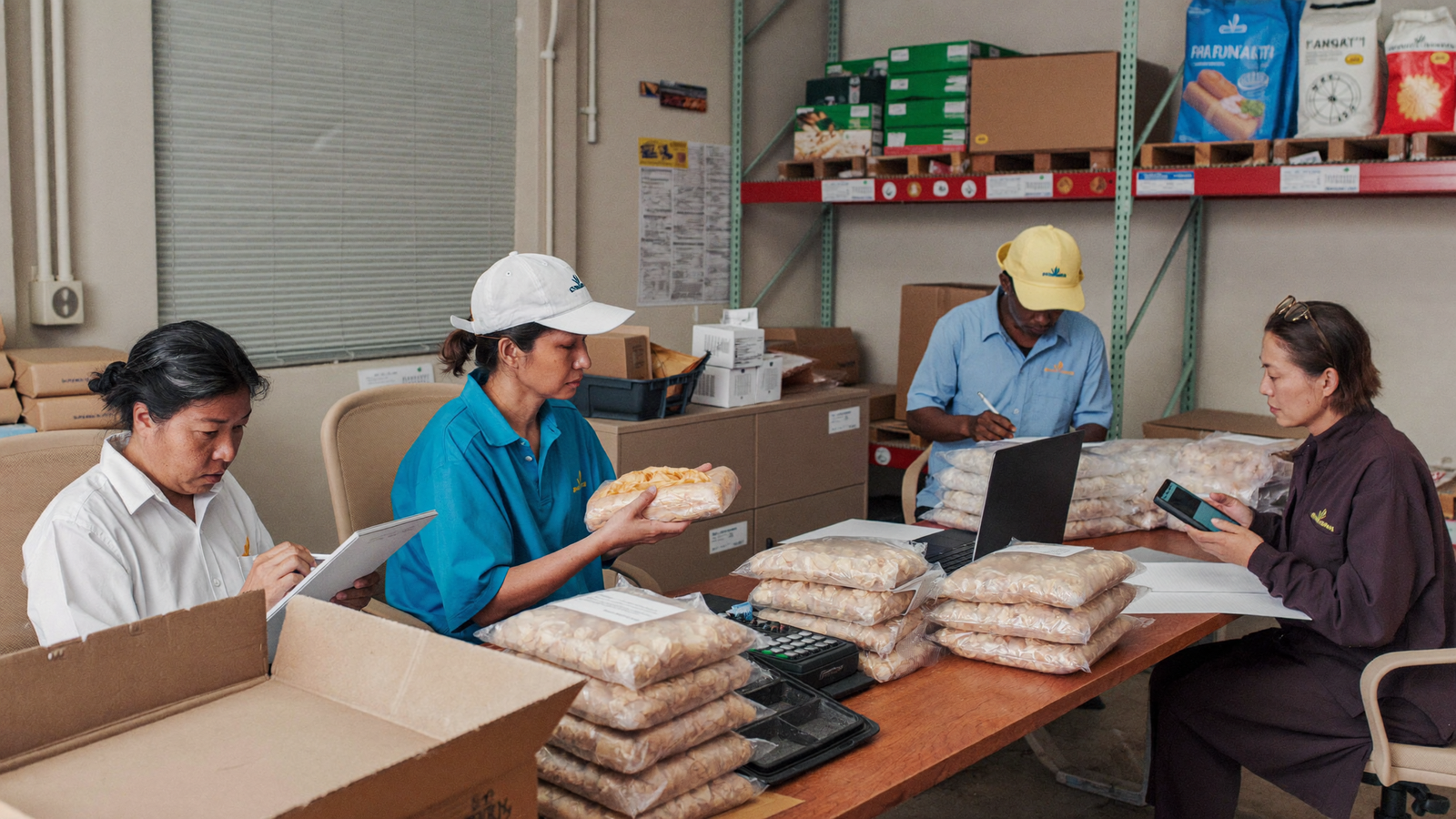
15. What are the true landed and served costs?
Model product cost, freight, insurance, duties, import taxes, clearance, storage, distributor and channel margins, local delivery, promotion, warranty, returns, credit, bad debt and service. Use scenario ranges for uncertain items and keep regulatory classifications aligned with the customs analysis. A product can show a strong gross margin before import and channel costs but fail after the complete customer journey is included.
16. What tax and transfer-pricing issues affect the model?
Map legal ownership, contracts, invoices, services, goods, royalties, funding and management support across entities. Determine required registrations, documentation and operational processes with qualified advisers. The Directorate General of Taxes publishes official taxpayer registration guidance, but transaction-specific treatment needs separate analysis. Avoid choosing contract flows solely for commercial convenience.
17. How much cash and management capacity will the entry consume?
Forecast setup, licences, advisers, people, premises, systems, product work, inventory, deposits, tax, working capital and contingency. Model delayed approvals and slower collections. Add headquarters time for decisions, documents and control. Define the next funding trigger and who may approve overruns. Underestimating management capacity can be as damaging as underestimating cash because unresolved decisions delay every connected workstream.
People, Controls and Readiness Questions
18. Which people must be in place, and when?
Sequence leadership, sales, regulatory, finance, operations and support hires around real dependencies. Establish employment contracts, payroll, policies, records and relevant social-security processes. Foreign personnel require a separate manpower and immigration review covering role, employing or sponsoring entity, location and duration. Do not make a single unapproved assignment critical to launch.
19. How will we remain compliant after launch?
Create a compliance calendar for corporate, investment, licensing, tax, accounting, employment, immigration, product, import, environment and other applicable obligations. Assign primary and backup owners, source documents, review evidence and escalation. IndoGateway’s PT PMA compliance checklist and investment-reporting overview help frame recurring responsibilities, which must be verified for the company.
20. What evidence will authorize launch and further investment?
Define a launch gate before pressure builds. Evidence should cover licences, product clearance, contracts, bank authority, staff onboarding, systems, inventory, tax processes and a tested order-to-cash cycle. Also define post-launch investment gates, such as repeat customers, contribution margin, regulatory stability, partner performance and cash conversion. Each gate should name a decision-maker and specify what happens if evidence is incomplete.
Convert the Answers Into an Investment Decision
Summarize the review in a one-page decision paper. State the recommended entry model, strategic rationale, expected economics, capital at risk, regulatory critical path, top assumptions, unresolved questions and next gate. Include a sensitivity table showing which variables most affect the outcome. Management should be able to understand why the proposed route is preferred and what evidence would cause the company to pause or change it.
Classify actions into no-regret preparation, reversible tests and irreversible commitments. Customer interviews, product classification work and partner diligence can often improve the decision before major capital is deployed. Incorporation, exclusivity, long leases, inventory and local hiring create deeper commitments. Sequence them behind evidence where the commercial and regulatory model allows.
For an integrated assessment, IndoGateway’s Indonesia entry plan can help connect company setup, licensing, tax, people, imports and product pathways.
Red Flags That Should Pause Investment
- The forecast depends on one unverified customer or one partner’s unsupported pipeline.
- The team cannot describe who will contract, invoice, import, hold approvals or employ local staff.
- A required activity or product route has not been checked against current official requirements.
- The business case omits distributor economics, landed cost, working capital or compliance overhead.
- Exclusivity is proposed before diligence, performance evidence or exit mechanics.
- Registrations or customer data would sit with a partner without practical continuity rights.
- Launch timing assumes every approval proceeds without questions, changes or dependencies.
- No executive owns the integrated entry plan or post-launch compliance.
Frequently Asked Questions
1. What should be included in an Indonesia market entry checklist?
A complete checklist should cover customer demand, route to market, partner or entity model, activities, business classifications, ownership, business licensing, product and import requirements, tax, funding, people, immigration, premises, contracts, systems and ongoing compliance. It should also identify dependencies, evidence, owners and decision gates. Generic task lists are less useful because requirements depend on the business activity, products, location and structure. The checklist should end with a tested transaction and a compliance calendar, not with the issue of incorporation documents.
2. How much market research is enough before investing?
Research is sufficient when management can make the next bounded decision with understood downside, not when uncertainty disappears. For an initial pilot, evidence might include a defined customer problem, credible buyer interviews, channel economics, competitive alternatives and regulatory feasibility. A larger entity, inventory or facility commitment requires stronger proof, such as repeat demand, a qualified pipeline and tested delivery assumptions. State what remains unknown and use staged investment. Top-down market size alone is rarely enough because it does not show accessible customers, purchase behavior or profitable fulfilment.
3. Should we form a PT PMA before testing the market?
Not automatically. A PT PMA can be appropriate early when direct contracting, hiring, local investment, control or licensing is fundamental. In other cases, a distributor or another permitted limited-scope model may support learning before a full platform is built. Compare the feasible routes, including their tax and regulatory implications, and decide what evidence the test must produce. Avoid informal local activity that assumes a foreign invoice resolves licensing or employment questions. The testing model itself should be lawful and should not create partner or registration dependencies that block the intended end-state.
4. What is the biggest risk in selecting an Indonesian distributor?
The largest risk is often structural dependency rather than a single poor sales period. A distributor may control customers, inventory, approvals, technical files or market data, making replacement slow and disruptive. Reduce the risk through diligence, a measured pilot, clear reporting, defined customer and channel scope, access to records, product-compliance responsibilities, performance remedies and an operational termination plan. Exclusivity should be justified and measurable. The principal should also understand whether product approvals can be transferred, because a contract cannot guarantee a regulatory outcome that the applicable regime does not permit.
5. How early should licensing and product checks begin?
They should begin while the entry model and business case are still being designed. Activity classification can affect entity and licence choices; product classification can affect the importer, applicant, dossier, labels, cost and timeline. Discovering these issues after signing a distributor, lease or customer delivery date can force expensive rework. Start with precise descriptions of services and products, proposed transaction flows, locations and counterparties. Use current official systems and specialist review for project-dependent conclusions, and date the findings so they can be refreshed before filing or launch.
6. How should we estimate an Indonesia market-entry budget?
Build the budget from workstreams and cash flows rather than a single setup quote. Include entity and licensing, advisers, translations and documents, tax and accounting, people, payroll, premises, systems, product registration, testing, labels, import and logistics, inventory, distributor support, customer credit, insurance and contingency. Add headquarters time and delayed-revenue scenarios. Separate one-time investment from recurring fixed cost and working capital. Then compare the distributor, PT PMA and hybrid cases at conservative, expected and upside volumes. Record which regulatory and commercial assumptions drive the largest range.
7. What should management approve before launch?
Management should approve evidence that the intended activities and products can operate through the chosen structure. This includes appropriate licences and approvals, authorized contracts and signatories, bank and payment controls, tax and accounting processes, lawful staff onboarding, verified product and import readiness, supply and service capability, data access, insurance where appropriate, and named compliance owners. A dry run of the order-to-cash or service-delivery cycle should be completed. Any unresolved regulated blocker should remain a blocker; a target date or commercial opportunity does not make an unmet requirement disappear.
8. How can IndoGateway help with a pre-investment review?
IndoGateway can help convert the 20 questions into a project-specific entry plan. The review can map transactions, activities, products, ownership, customers, partners, locations, people and funding, then connect them to company setup, business licensing, tax, employment, import and product workstreams. Management receives a clearer view of critical dependencies, open decisions and the evidence required for each investment gate. This integrated approach is especially useful where several advisers or business teams are involved, because it creates one operating picture while preserving the need for specialist verification of regulated conclusions.
Conclusion
The best Indonesia market entry checklist is a decision system. It identifies the assumptions that matter, tests them in the right order and prevents investment from running ahead of commercial or regulatory evidence. Answering these 20 questions will not remove uncertainty, but it will show management where that uncertainty sits and how to reduce it before committing more capital.
Regulatory note: Indonesian investment, licensing, tax, immigration, product, environmental and operating requirements may change and may depend on the business activity, ownership structure, location, products and project circumstances. This article provides general information and is not project-specific legal, tax or regulatory advice. Applicable requirements should be verified before implementation.
Get a Decision-Ready Entry Plan
Turn open questions into verified workstreams and investment gates. Contact IndoGateway to discuss a structured pre-investment review for Indonesia.