

The consequences can travel across the project. The selected classification may affect how an activity appears in the Online Single Submission system, or OSS, which risk-based requirements are displayed, whether an investment restriction needs review, and which sector-specific approvals or supporting licences may become relevant. It can also shape how the company describes its purposes in establishment documents and how future expansion is handled.
This guide explains how to choose a defensible KBLI Indonesia classification by starting with the operating model, checking the official description, and validating the result against connected legal and licensing workstreams.
Key Takeaways
- Use KBLI 2025 as the current official classification reference and confirm the live position in OSS before filing.
- Describe the company’s real activities first; do not select a code from its title alone.
- Read the full official description, including inclusions, exclusions, hierarchy, scope, and related activities.
- Separate distinct revenue-generating or operational activities instead of forcing an entire business model into one code.
- Check the KBLI selection against OSS risk treatment, foreign-investment rules, sector licences, products, location, and operating structure.
- For an existing business using KBLI 2020, use the official conversion tools because a code may remain, change, split, merge, or be reorganized.
- Document why each code was selected and have uncertain or regulated activities reviewed before implementation.
What Is KBLI in Indonesia?
KBLI stands for Klasifikasi Baku Lapangan Usaha Indonesia, Indonesia’s standard classification of economic activities. Statistics Indonesia, or BPS, publishes the classification to group activities that share similar characteristics. Government systems use KBLI as a common language for identifying what an enterprise does.
KBLI 2025 is the current official edition. It was established through BPS Regulation No. 7 of 2025 and replaced the 2020 edition as the classification standard. BPS explains that the update responds to changing economic activities and models, including developments in digital services, creative content, renewable energy, carbon-related activities, and financial services. The official KBLI 2025 publication is the core classification source.
For business founders, however, KBLI is more than a statistical label. OSS uses KBLI as a reference in business licensing. This is why an apparently small classification decision can influence the licensing path presented for a project. IndoGateway’s guide to NIB, OSS, and KBLI in Indonesia explains how these elements connect in practice.
Why the Right KBLI Code Matters
The right code should describe the activity the company genuinely plans to perform. That alignment supports a coherent registration and licensing record. It also gives advisers, counterparties, and internal teams a consistent starting point when assessing the business.
A poor match can create several practical problems:
- Licensing mismatch: OSS may associate the selected activity with requirements that do not fit the intended operation, while requirements for the real activity may remain unaddressed.
- Investment mismatch: A foreign-owned company may need to assess whether the activity is open, restricted, reserved, or subject to conditions under the investment framework.
- Scope mismatch: The company’s establishment documents, commercial contracts, website claims, invoices, facility, and actual operations may tell different stories.
- Product or sector mismatch: Trading, manufacturing, digital services, construction, healthcare, food, cosmetics, logistics, and other regulated sectors may involve distinct classifications and approvals.
- Expansion friction: Adding a new sales channel, product line, service, or production process later may require a classification and licensing review.
KBLI should therefore be selected before the corporate and licensing workstreams become fixed. For foreign investors, this review belongs alongside the entity design and PT PMA registration process, not after operations are ready to launch.
KBLI 2025 and the Transition from KBLI 2020
Businesses and advisers will continue to encounter references to KBLI 2020 in older licences, corporate records, templates, articles, and internal databases. Those references should not be assumed to map automatically to the same code and scope in KBLI 2025.
The official OSS conversion guide identifies five possible relationships between the editions: a code can remain the same, change one-to-one, split into several new codes, merge with other old codes, or be reorganized across several codes. Even when a number stays the same, wording or scope may have changed. The official OSS conversion tool should be used to investigate the mapping, followed by a review of the full KBLI 2025 description.
BPS has also stated that implementing KBLI 2025 does not, by itself, require every existing business to obtain new licences. That general transition statement should not be interpreted as a conclusion that no action is needed for a specific company. The correct response may depend on the conversion type, the company’s existing records, what OSS displays, and whether the actual business has changed.
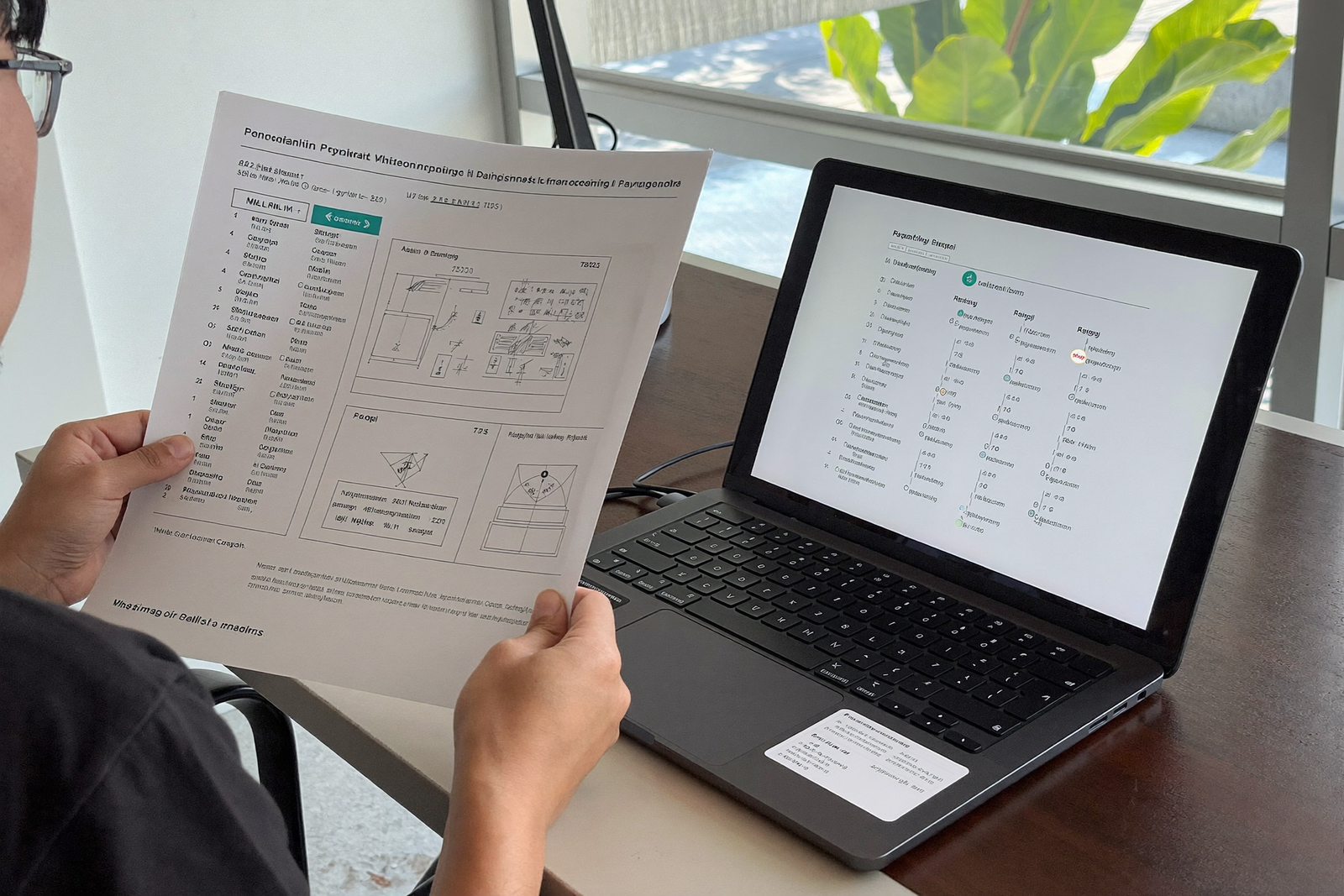
How to Choose the Right KBLI Indonesia Classification
1. Start with activities, not code titles
Write a plain-language description of the proposed Indonesian operation before searching the database. Focus on actions: what the company makes, buys, sells, imports, distributes, operates, installs, hosts, advises on, rents, or delivers. State who the customer is, how the product or service reaches that customer, and whether the company acts as principal, agent, marketplace, manufacturer, contractor, or service provider.
A sentence such as “we are a technology company” is not specific enough. A useful activity map might separate software development, platform operation, data hosting, subscription sales, consulting, hardware distribution, and after-sales support. Those activities may not belong to one classification merely because they are packaged under one brand.

2. Separate the operating model into activity lines
Create one row for each material activity. Include current launch activities and only those near-term activities that have a credible operating plan. Avoid adding a long list of speculative codes “just in case.” Unnecessary codes can introduce questions, conditions, or compliance work that the company did not intend to manage.
| Question | What to record | Why it matters |
|---|---|---|
| What is delivered? | Specific goods, service, access, output, or facility | Distinguishes activities that use similar commercial language |
| What does the Indonesian entity do? | Manufacture, wholesale, retail, import, develop, operate, advise, install, or support | Separates the entity’s activity from that of an overseas parent or vendor |
| Who pays the entity? | Consumers, businesses, government, affiliates, sellers, or advertisers | Clarifies the commercial relationship and revenue model |
| Where does it happen? | Office, store, warehouse, factory, project site, cloud environment, or customer site | Surfaces location and facility dependencies |
| What is supporting rather than core? | Internal administration, marketing, procurement, or incidental support | Prevents every internal function from being treated as a separate external business activity |
3. Search the official KBLI 2025 database
Search by several concrete terms, including the product, the service, the process, and close synonyms. Use the OSS KBLI 2025 search and the BPS publication rather than relying on a third-party code list. Third-party tools may help discovery, but the official description should govern the final analysis.
Build a shortlist instead of choosing the first plausible result. Adjacent classifications often divide wholesale from retail, manufacture from repair, content creation from platform operation, or an activity performed for the company’s own account from one performed for a fee or under contract.
4. Read the complete description and exclusions
The title is only a label. Read the activity description, examples, express inclusions, exclusions, and cross-references. Then move up the hierarchy to understand the broader category and down to the most specific available group. The best candidate is normally the most specific code whose official scope matches the actual activity without stretching the language.
Pay close attention to phrases equivalent to “includes,” “also includes,” and “does not include.” An exclusion may direct the activity to a different code that is a better legal and operational fit. Save the relevant text or a dated reference in the company’s classification memorandum.
5. Identify the main and additional activities
A company may conduct more than one genuine business activity. The analysis should distinguish its principal activity from additional material activities and show how each one earns revenue or supports delivery to third parties. Multiple codes should reflect the real model, not serve as a substitute for deciding what the company will do.
Where several outputs arise from one production line or one integrated process, obtain project-specific guidance on how OSS and the relevant sector rules treat the arrangement. The correct result can depend on process, products, location, and system implementation.
6. Test the shortlist against OSS risk-based licensing
Indonesia’s business licensing framework is risk-based under Government Regulation No. 28 of 2025, which replaced the earlier 2021 regulation. The activity data entered in OSS contributes to the licensing route displayed for the project. The applicable output may also depend on business scale, sector, location, project details, and other submitted information.
Do not assume that two similar codes carry identical requirements. Review the activity’s scope and the information shown by OSS, including business licensing and any licences supporting the business activity. For a practical overview, see IndoGateway’s guide to business licensing in Indonesia through OSS.
7. Check investment eligibility and ownership conditions
For a foreign-investment company, the analysis is incomplete until the shortlisted code is checked against the current investment rules. Presidential Regulation No. 10 of 2021, as amended by Presidential Regulation No. 49 of 2021, provides the framework for business fields open to investment and activities subject to exclusions or conditions. The official regulation database lists the amending regulation as in force.
Do not generalize an ownership conclusion from a neighboring code or from an undated online list. Conditions may be code-specific and may interact with sector legislation, scale, partnerships, geography, or other criteria. The proposed shareholders and business model should be reviewed against the current rules applicable at the time of filing.
8. Validate connected approvals and operating dependencies
KBLI does not replace sector analysis. A code may be correctly selected while the project still needs to assess product registration, import arrangements, standards, environmental approvals, building matters, workforce permissions, professional qualifications, or other operational requirements.
Run a dependency check across the full project:
- entity type, shareholders, and foreign-investment status;
- products, services, users, and sales channels;
- manufacturing, importing, distribution, and warehousing roles;
- land, zoning, building, factory, and environmental circumstances;
- technology, data, platforms, and electronic systems;
- Indonesian and foreign personnel; and
- sector-specific licences and supporting approvals.
9. Align corporate records with the chosen scope
The final selection should be reflected consistently across the company’s establishment purposes, OSS profile, NIB and licensing records, internal business plan, commercial documents, facility plan, and actual activities. Exact documentary requirements should be confirmed with the notary and relevant advisers.
Consistency does not mean copying a code title into every document without explanation. It means that the records, taken together, describe the same operation. If the model changes, review the classification before signing contracts, importing products, commissioning a site, or marketing a newly regulated service.
10. Record the reasoning and obtain specialist validation
Prepare a short decision record for each selected code. It should state the actual activity, candidate codes considered, why alternatives were rejected, the official description relied on, conversion status if relevant, assumed operating facts, and outstanding regulatory questions. This makes later review faster and helps prevent a classification from being carried forward after the business model has changed.
Specialist review is particularly valuable when descriptions overlap, a code has split or merged, foreign ownership is involved, OSS produces an unexpected result, or a sector is heavily regulated. IndoGateway’s NIB and OSS licensing support can coordinate the classification review with the broader setup workstream.
A Practical KBLI Selection Checklist
- Describe each activity in verbs and concrete outputs.
- Confirm which activity the Indonesian entity itself performs.
- Map revenue streams, customers, channels, locations, and facilities.
- Search KBLI 2025 using the official BPS and OSS resources.
- Shortlist the most specific plausible codes.
- Read each full description, inclusion, exclusion, and cross-reference.
- Check whether any legacy KBLI 2020 code stayed, changed, split, merged, or was reorganized.
- Distinguish the principal activity from additional genuine activities.
- Review the live OSS scope, risk treatment, and displayed licensing path.
- Check foreign-investment eligibility and any applicable conditions.
- Map sector, product, import, facility, environmental, workforce, and location dependencies.
- Align corporate records and document the selection rationale.
- Escalate ambiguous or high-risk conclusions for specialist verification.

Common KBLI Selection Mistakes
Choosing by title alone
A familiar title can hide a scope that excludes the proposed activity. The description and cross-references matter more than the label.
Copying a competitor’s code
Two companies can market similar offerings while performing different regulated activities. One may own inventory; another may act as an agent. One may develop software; another may only distribute access. The competitor’s ownership, facility, licences, and code version may also differ.
Selecting every remotely relevant code
An oversized list can weaken rather than strengthen the filing. Each code should correspond to a real activity the entity is prepared to conduct and support.
Confusing a sales channel with the underlying activity
Using a website or app does not automatically make every company a platform operator. Determine what the entity actually provides, who contracts with whom, and how value and payment move.
Ignoring the KBLI 2025 conversion
A legacy code may no longer lead to a single new code. A split, merger, or reorganization requires analysis of the current scope, not mechanical replacement.
Treating KBLI as the whole compliance answer
KBLI is a classification anchor. It is not a substitute for checking investment, sector, product, import, location, construction, environmental, tax, employment, or immigration requirements.
When Should a Company Revisit Its KBLI Codes?
Review is sensible whenever the operation changes in substance. Triggers can include adding a product category, moving from wholesale to direct consumer sales, beginning local production, operating a platform, importing in the company’s own name, installing customer equipment, entering a regulated sector, opening a new type of facility, or acquiring a business with different activities.
Existing businesses should also review their classification when official editions change or when a filing, bank, customer, tender authority, sector regulator, or OSS workflow reveals an inconsistency. The purpose is not to accumulate codes. It is to keep the company’s official scope aligned with what it actually does.
Frequently Asked Questions
1. What does KBLI mean in Indonesia?
KBLI means Klasifikasi Baku Lapangan Usaha Indonesia, or the Indonesian Standard Industrial Classification. It is the official framework used to group economic activities according to shared characteristics. BPS publishes the classification, and government systems use it as a common reference for identifying business activities. For a company, the selected KBLI code helps describe what the Indonesian entity will actually do and connects with OSS business-licensing processes. It should therefore be chosen from the full activity description, not merely from a familiar-sounding title or a code used by another company.
2. Is KBLI 2020 still the current classification?
No. KBLI 2025 is the current official classification and replaced KBLI 2020 under BPS Regulation No. 7 of 2025. However, KBLI 2020 remains relevant when reviewing legacy corporate records, licences, internal systems, and earlier advice. The transition is not always a simple code substitution. According to the official OSS conversion guide, an old code may remain, change, split, merge, or be reorganized. Existing businesses should use the official conversion resources and review the new description, while confirming any project-specific action required in OSS or other records.
3. Can one Indonesian company have more than one KBLI code?
Yes, an Indonesian company can generally record more than one genuine business activity, but that does not mean it should select every code that might become useful someday. Each additional classification should have a defensible connection to the entity’s actual or credibly planned operations. The company should distinguish its principal activity from material secondary activities and test each code against corporate purposes, OSS data, investment eligibility, licences, facilities, and sector rules. The appropriate combination depends on the operating model, and an adviser should review integrated or overlapping activities when the official descriptions do not produce a clear answer.
4. How do I find the correct KBLI code for my business?
Begin by describing the activity in operational terms: the specific product or service, what the Indonesian entity does, who pays it, how delivery occurs, and where the work happens. Search those terms and close synonyms in the official OSS KBLI 2025 database and BPS publication. Shortlist several plausible codes, then read their complete descriptions, inclusions, exclusions, hierarchy, and cross-references. After identifying the best descriptive match, validate it against the live OSS licensing scope, investment rules, sector approvals, products, locations, and facilities. Ambiguous classifications should receive documented specialist review before filing.
5. Does choosing a KBLI code automatically give the company permission to operate?
No. Selecting or recording a KBLI code identifies an economic activity; it does not, by itself, establish that every requirement to conduct that activity has been satisfied. The licensing route may involve an NIB, risk-based business licensing, verified standards, licences, or approvals supporting the business activity, depending on the code and project data. Separate requirements may arise from the product, sector, import role, location, facility, environmental impact, building, workforce, or professional services involved. The company should confirm what has actually been issued and effective in OSS and any relevant sector system before beginning operations.
6. Does the KBLI code determine whether foreign ownership is allowed?
The KBLI classification is a key reference when assessing foreign-investment eligibility, but the code alone should not be treated as the entire legal conclusion. The selected activity must be checked against Indonesia’s current investment framework and any applicable sector-specific legislation. Conditions may depend on the precise activity, investor profile, business scale, partnership arrangements, geography, or other project facts. Because neighboring codes can have different treatment, foreign investors should not rely on a general industry label or an undated ownership table. The proposed code and shareholding structure should be reviewed together before incorporation or expansion.
7. What should an existing company do when its KBLI 2020 code changed under KBLI 2025?
First, check the old code in the official OSS conversion tool and identify whether it remained, changed, split, merged, or was reorganized. Next, compare the company’s actual activities with every relevant KBLI 2025 description; do not select a successor solely because it appears in a conversion table. Then review the company’s OSS record, NIB, licences, corporate purposes, contracts, and operational scope for consistency. Government guidance indicates that KBLI 2025 implementation does not automatically require all businesses to obtain new licences, but the action needed for a particular company should be verified from its conversion result and circumstances.
8. When is professional help useful for KBLI selection?
Professional support is useful when several descriptions overlap, the business combines multiple revenue models, a legacy code has split or merged, foreign investment is involved, or the selected activity is regulated. It is also valuable when OSS displays unexpected requirements or when the project involves manufacturing, importing, products requiring registration, digital platforms, construction, healthcare, logistics, environmental approvals, or specialized facilities. A good review should not merely supply a number. It should explain the classification rationale, identify assumptions, test connected licensing and ownership issues, and show what must be verified before the company files or begins the activity.
Conclusion
The right KBLI Indonesia classification is the code, or defensible set of codes, that most accurately reflects the Indonesian entity’s real activities and survives review against the official description, OSS licensing scope, investment framework, and operating model. The process begins with facts about the business, not with a database keyword.
Use KBLI 2025, investigate legacy conversions carefully, document the reasoning, and validate every connected workstream before implementation. That discipline makes the classification useful: it becomes a stable foundation for company setup, licensing, compliance, and future growth rather than a label that must be repaired later.
Choose Your KBLI Codes with the Full Project in View
A reliable classification review connects the proposed activity to company establishment, OSS, licensing, foreign ownership, products, facilities, and the way the business will actually operate. Contact IndoGateway to assess your KBLI shortlist and coordinate the next steps for your Indonesia market entry or business expansion.


